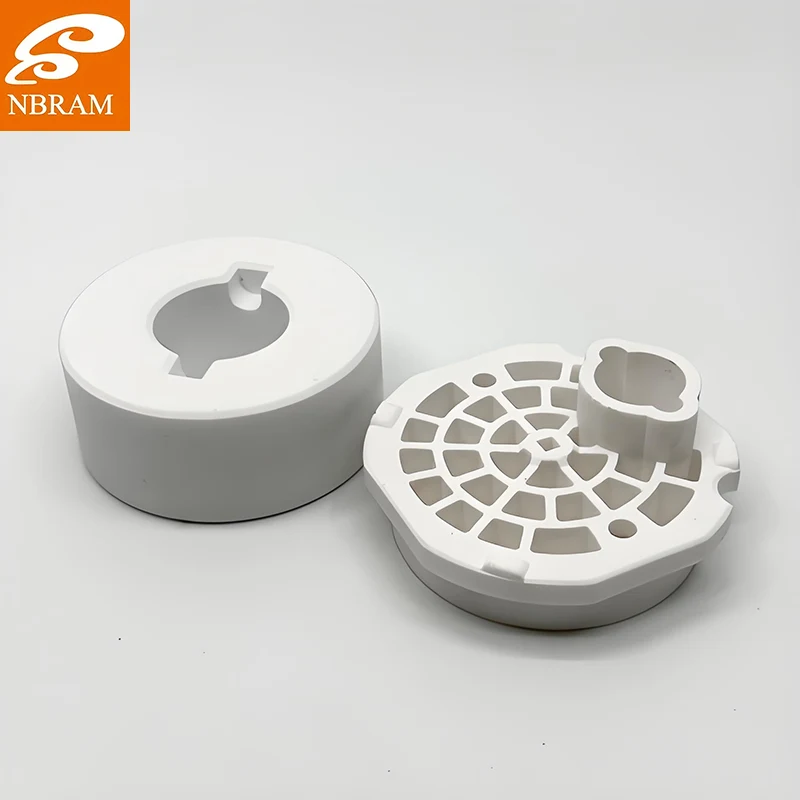

Stamped mica parts are a versatile component in electrical and thermal insulation applications. Their shape significantly affects installation flexibility, heat dissipation, and overall performance in industrial devices. At our factory, we produce Mica Part in a range of configurations, from simple flat sheets to complex multi-layered geometries. Ningbo Ram Electric Material Co., Ltd. emphasizes precision stamping to maintain dimensional accuracy while meeting high dielectric and thermal resistance requirements. Our engineers work closely with customers to determine the optimal shape based on their equipment design and operational conditions.
Common shapes include rectangular, circular, oval, and custom cut forms. Rectangular pieces are frequently used in transformers and high-voltage assemblies, while circular and oval designs suit heating elements and rotary devices. Multi-layered shapes can enhance thermal stability and provide mechanical support in heavy-duty applications. Our team often advises clients on selecting the right geometry to ensure proper mounting, heat transfer, and electrical isolation.

The thickness of mica sheets directly impacts both mechanical strength and insulating performance. Our factory offers mica in a range of thicknesses, typically from 0.1 mm to 3 mm, suitable for various industrial applications. When designing Mica Part, our engineers consider voltage requirements, operating temperature, and mechanical load to optimize thickness and flexibility. Ningbo Ram Electric Material Co., Ltd. maintains strict quality control to ensure uniform thickness across batches, which is critical for maintaining consistent electrical performance.
Electrical properties, including dielectric strength and volume resistivity, are crucial for safety and efficiency. Our Mica Part achieves high dielectric strength, often exceeding 15 kV/mm, and volume resistivity greater than 10^14 ohm-cm. This ensures reliability in transformers, motors, and other high-voltage devices. Our technical team regularly tests these parameters under simulated operating conditions to guarantee performance over extended periods.
Different shapes of stamped mica parts are suited to distinct applications based on functional requirements. Rectangular mica pieces are widely used in laminated transformers, switchgear, and busbars where flat mounting surfaces are necessary. Circular and oval parts are ideal for circular heating elements, coil insulation, and motor components where rotation or radial symmetry is required. Custom shapes can include slots, cutouts, or layered configurations to accommodate mounting brackets or conductive pathways.
Our engineers work with clients to identify the ideal design for each application, balancing electrical isolation, thermal performance, and ease of installation. Mica Part is commonly implemented in electrical devices, thermal insulation layers, and industrial heating systems. At our factory, we provide design support to optimize shape for both functionality and manufacturability.
Surface treatments on mica can improve heat resistance, mechanical strength, and dielectric properties. Our factory applies coatings, lamination, or impregnation techniques to enhance durability. NBRAM Electric Material integrates these processes to produce Mica Part suitable for high-temperature or high-voltage environments. For example, laminated mica sheets provide added strength and minimize cracking during installation or thermal cycling.
Surface treatment also helps in improving adhesion when Mica Part is combined with adhesives, metallic layers, or insulating varnishes. Our team evaluates the compatibility of coatings with operational conditions to ensure the long-term stability of stamped mica components in industrial applications.
Understanding mechanical and thermal parameters is important for designing reliable stamped mica components. Our factory tests Mica Part for tensile strength, bending resistance, and thermal expansion. High-temperature stability ensures that mica maintains structural integrity during prolonged operation in heaters, transformers, and other industrial equipment.
The table below illustrates common mechanical and thermal properties for reference:
| Parameter | Typical Range | Application Notes |
| Tensile Strength | 50–150 MPa | Ensures dimensional stability under load |
| Bending Resistance | 20–80 MPa | Critical for installation in thin layers or complex shapes |
| Thermal Conductivity | 0.2–0.5 W/m·K | Supports effective heat dissipation in transformers and heaters |
| Operating Temperature | -50°C to 600°C | Applicable to high-temperature electrical and thermal applications |
Layering multiple mica sheets or laminating them with adhesives can increase mechanical strength, thermal stability, and dielectric performance. Our team applies these techniques to produce Mica Part capable of handling high stress or extreme temperature variations. Laminated mica is particularly valuable in motor stators, high-voltage transformers, and industrial heaters where both electrical insulation and structural integrity are required. At our factory, we ensure that laminating adhesives are compatible with mica to maintain long-term performance and avoid delamination.
The following table summarizes common layer configurations and their typical applications:
| Layer Type | Number of Layers | Key Applications | Benefits |
| Single Layer | 1 | Small electrical components | Flexibility, easy cutting |
| Double Layer | 2 | Transformers, heaters | Improved mechanical strength, thermal stability |
| Multi-Layer Laminated | 3–5 | High-voltage insulation, heavy-duty motors | Enhanced dielectric strength, dimensional stability |
Which shape of stamped mica part is most suitable for rotary devices?
Circular or oval stamped mica parts are preferred for rotary devices because their symmetry allows even rotation and reduces mechanical stress. They also facilitate uniform heat distribution in heating elements and rotating motors.
How does thickness influence the electrical insulation of mica parts?
Thicker mica parts generally provide higher dielectric strength, improving electrical insulation and preventing arcing. Our factory recommends selecting thickness according to voltage levels, operating temperature, and mechanical load requirements to maintain reliable insulation.
Why are laminated mica parts often chosen for high-voltage transformers?
Laminated mica combines multiple layers to enhance both mechanical strength and dielectric performance. This design prevents cracking, reduces electrical leakage, and ensures long-term stability in transformers and other high-voltage applications.
Stamped mica parts are a critical component in electrical insulation, thermal management, and industrial heating applications. Their shape, thickness, material composition, and lamination method directly influence performance. At our factory, we produce Mica Part with precision, focusing on consistent quality and tailored design. Ningbo Ram Electric Material Co., Ltd. works closely with customers to select shapes, layers, and materials that best meet operational requirements. For customized solutions, technical guidance, or sample evaluation, contact our team today and let us assist you in optimizing your system with high-quality stamped mica components.