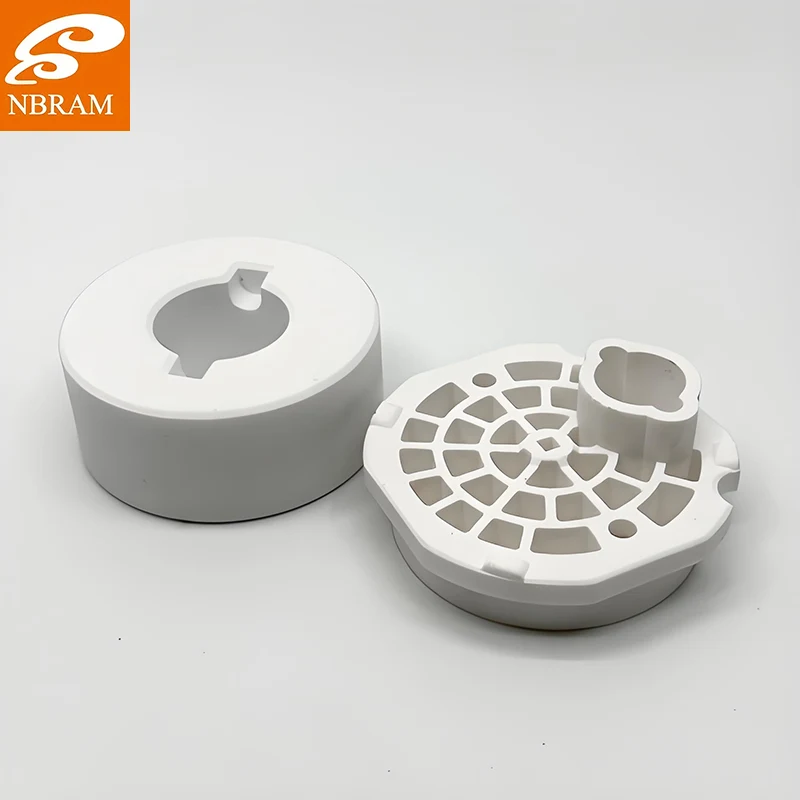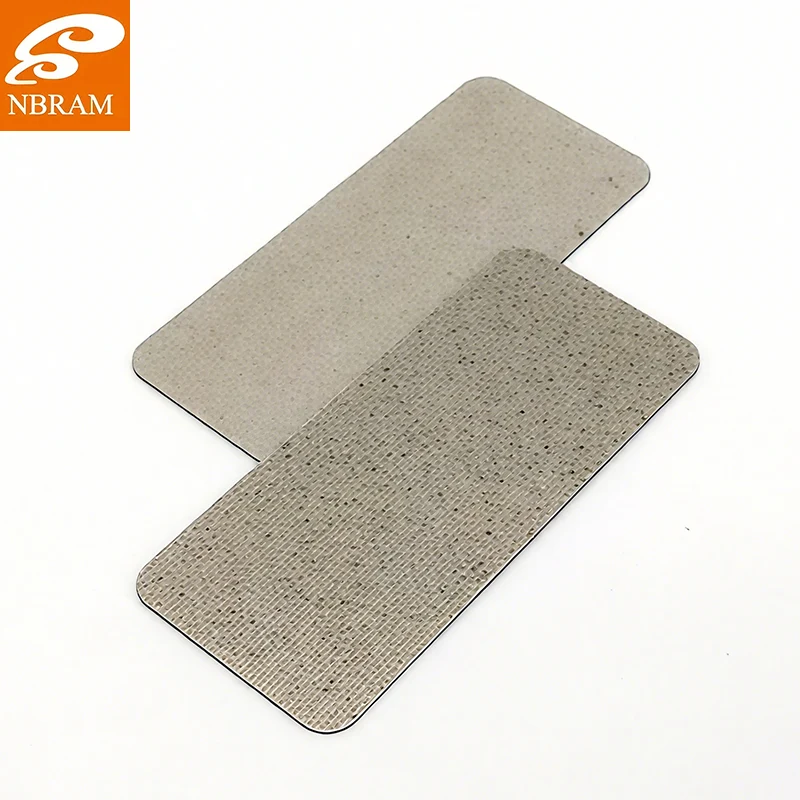

In precision insulation components, the dimensional accuracy achieved during mica die-stamping determines how well the final part performs in thermal, electrical, and mechanical environments. When clients approach our factory asking about the achievable tolerances, they usually want a realistic range grounded in real production capability. At Ningbo Ram Electric Material Co., Ltd., our approach of mica part focuses on stable raw materials, tool accuracy, and controlled forming pressure to maintain consistent tolerances across different geometries.
The inherent structure of mica affects both its machinability and the achievable tolerance window. Because a Mica Part is made from layered mineral sheets bonded with heat-resistant resin, the density and resin distribution become major factors in dimensional stability. In our production process, we evaluate hardness variation, moisture content, and fiber orientation before setting tool pressure. This allows our factory to keep tolerance drift within a predictable range, especially on thin-wall profiles.
To help clients compare common industrial grades, the following table summarizes typical mechanical and thermal properties we work with when defining stamping tolerances.
| Material Grade | Density Range | Thermal Resistance | Recommended Thickness Range |
| Rigid Mica Sheet | 1.9 to 2.2 g per cubic centimeter | Up to 1000 degrees Celsius | 0.1 to 2.0 millimeters |
| Flexible Mica Sheet | 1.3 to 1.8 g per cubic centimeter | Up to 600 degrees Celsius | 0.15 to 2.5 millimeters |
| High Compression Mica | 2.0 to 2.4 g per cubic centimeter | Up to 1200 degrees Celsius | 0.2 to 1.8 millimeters |
Tooling is one of the determining elements in the accuracy of a Mica Part. High precision punch-and-die assemblies allow our factory to maintain edge quality and minimize deformation during release. When producing intricate profiles with tight inner radii, tool rigidity and clearance control must be aligned with the thickness and hardness of the material. Ningbo Ram Electric Material Co., Ltd. invests in hardened steel die sets and regularly performs dimensional calibration to avoid tolerance creep during long production runs.
The table below outlines common dimensional targets we maintain for standard and customized stamped components.
| Feature Type | Typical Tolerance | Notes |
| Outer Profile | Plus or minus 0.10 millimeters | Stable on rigid sheets up to 1.5 millimeters |
| Inner Cutouts | Plus or minus 0.15 millimeters | Dependent on punch sharpness and clearances |
| Hole Diameter | Plus or minus 0.08 millimeters | Best achieved on high compression grades |
| Thin Web Sections | Plus or minus 0.20 millimeters | May vary due to layered structure |
The size, thickness, and geometry of a Mica Part determine how much pressure can be applied without causing micro fractures or delamination. Larger parts experience greater shear force across the sheet, creating a wider tolerance range. When our factory handles extremely small components with narrow sections, we adjust the stroke speed and reduce die pressure to maintain accuracy without stressing the material. For complex multi-level profiles, Ningbo Ram Electric Material Co., Ltd. uses staged forming to minimize deformation at the edges.
In general, thin sheets under 0.3 millimeters achieve the tightest dimensional control, while thick sheets require more compensation during tooling setup. However, with stable raw materials and calibrated dies, our production consistency remains reliable across varying geometries.
Maintaining consistent tolerances in mica die-stamping requires more than good tooling; it depends on disciplined inspection routines. Our team performs in-process measurements using optical comparators and digital gauges to confirm that every batch stays within the required range. This workflow helps ensure that each Mica Part meets dimensional expectations before packaging. Because industrial insulation assemblies depend on alignment accuracy, our factory tracks measurement trends and adjusts the process before deviation becomes significant.
Ningbo Ram Electric Material Co., Ltd. applies strict sampling rules based on batch size and part complexity. For long-run orders, extra checkpoints are added to verify stability after each tooling cycle. This method reduces reject rates and ensures that high volume projects maintain uniformity from the first piece to the last.
Q1: What tolerance range is realistic for complex shapes in mica stamping?
For complex geometries with tight radii or internal windows, a typical accuracy range falls between plus or minus 0.12 to 0.20 millimeters. The layered mineral structure influences stability, so the exact tolerance depends on thickness and material grade. When working with complicated shapes, our technicians adjust die clearance and stroke pressure to keep dimensions consistent.
Q2: Do different mica grades affect the achievable tolerance?
Yes, different grades behave differently under compression. Rigid sheets allow tighter control, while flexible grades can vary slightly due to resin distribution. When selecting material for a Mica Part, we evaluate its density and hardness to estimate the achievable tolerance window. This ensures the final component matches the assembly requirements.
Q3: How does punching speed influence stamping accuracy?
Punching speed directly affects edge finish and tolerance stability. Faster strokes create more shear, increasing the chance of edge flare or micro cracking. By lowering stroke speed when necessary, our factory maintains clean edges and stable dimensions, especially for thin-wall parts that require delicate handling.
Achieving reliable tolerances in mica die-stamping requires a balanced combination of material stability, precise tooling, and controlled forming pressure. At Ningbo Ram Electric Material Co., Ltd., our expertise in insulation materials allows us to maintain consistent accuracy across a wide range of profiles, helping clients integrate each Mica Part seamlessly into their assemblies. If your project demands dependable dimensional control with fast turnaround, contact our engineering team to discuss custom specifications. We are ready to support your production goals with stable quality and precise manufacturing capabilities.