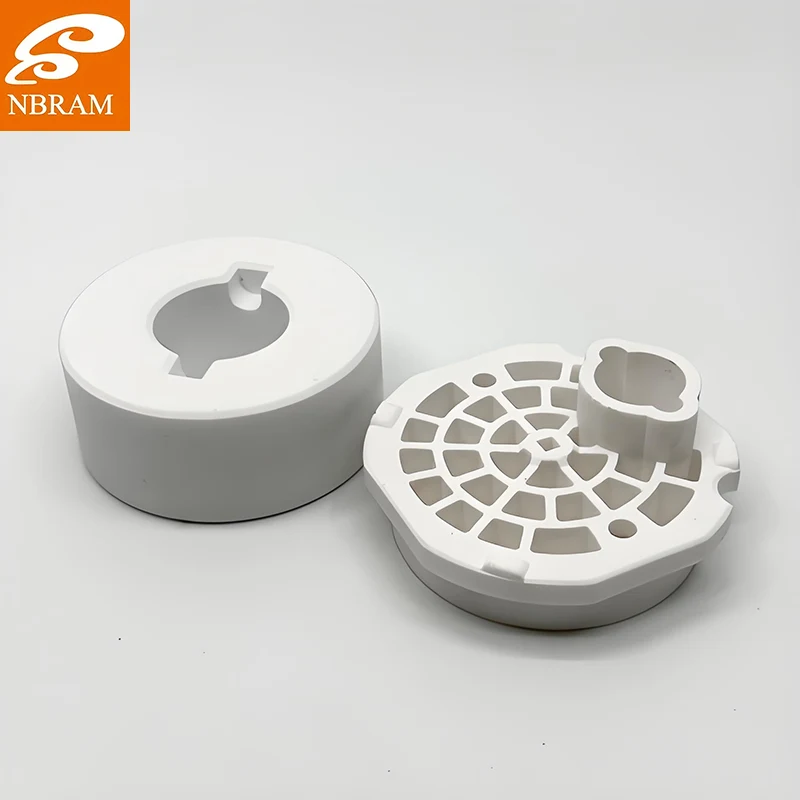

Most bobbin conversations start with plastic. PBT, PET, phenolic. Cheap, quick to wind, and for 50/60 Hz mains transformers usually the sensible answer. Move switching frequency toward 100 kHz and the balance shifts: the core shrinks, the transformer shrinks, and the layer insulation inherits the stress. That is where mica bobbins stop looking exotic.
Ask a design engineer on server power supplies where the last thermal surprise came from and you rarely hear "the core". It is usually the layer insulation — dielectric heating nobody budgeted for, a partial discharge starting at a flange corner, a hot spot that only appears once the assembly is potted. Stress per layer stays high at high frequency while the surface area shedding heat gets smaller. Plastic handles the electrical part for a while. The thermal part sets the service life.
NBRAM's mica electronic insulation bobbins are rated for continuous operation from -50°C to 850°C, a different material class from the thermoplastics used for most coil formers. Mica is a mineral laminate bonded under heat and pressure instead of injection moulded, so it never passes through a softening stage on the way to its limit. Dielectric strength runs 25-40 kV/mm, and surface resistivity holds above 10¹⁴ ohms/square even after extended thermal exposure. The insulation margin designed in on day one is still there a few thousand cycles later.
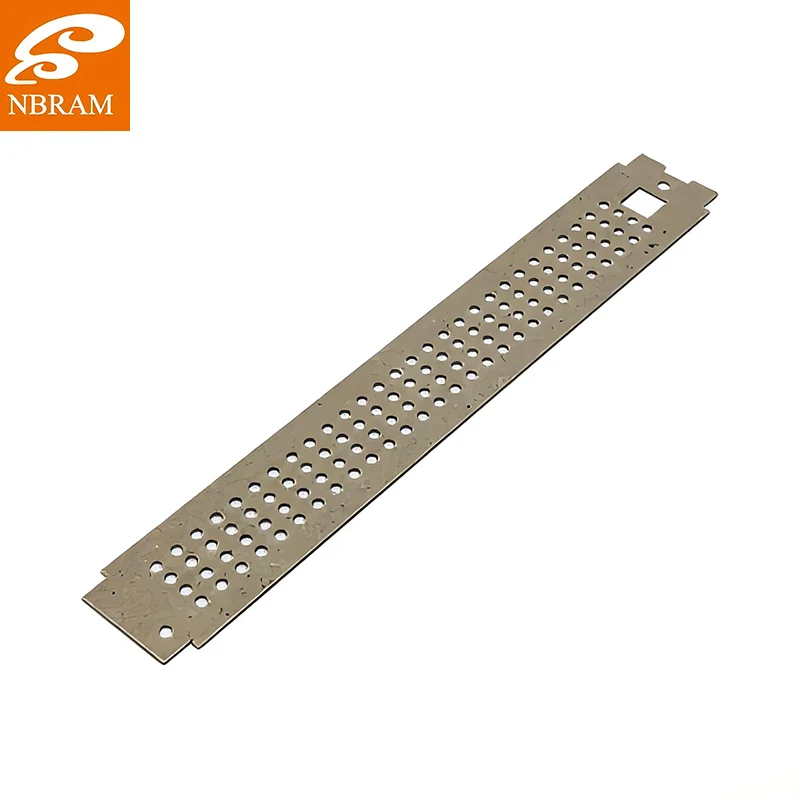
Thermal conductivity of 0.5-0.8 W/m·K matters as much as the temperature ceiling. Inside a potted transformer there is almost no air movement to help, so heat leaves through the solid path. Mica bobbins that carry heat away from the winding flatten the hot spot; ones that hold it in trap the heat where the wire enamel is thinnest.
Spec sheets rarely capture what breaks a bobbin on the winding line. Flange geometry does. These bobbins are moulded with precision grooves and termination slots so wire enters cleanly instead of riding over an edge, and the diamond cutting process holds ±0.05 mm on those features. That tolerance is what keeps nicks out of the enamel during high-speed automated winding. Standard diameters span 5 mm to 100 mm, with custom configurations for specific transformer designs.
The mechanical numbers behind the geometry: density between 2.8 and 3.2 g/cm³, compressive strength of 300-450 MPa depending on wall thickness, dimensional stability within 0.02% through thermal cycling. Winding tension pushes outward on the flanges, and a former that creeps under that load quietly changes its own capacitance characteristic. Stable geometry means the characteristic you simulated is the one that ships.
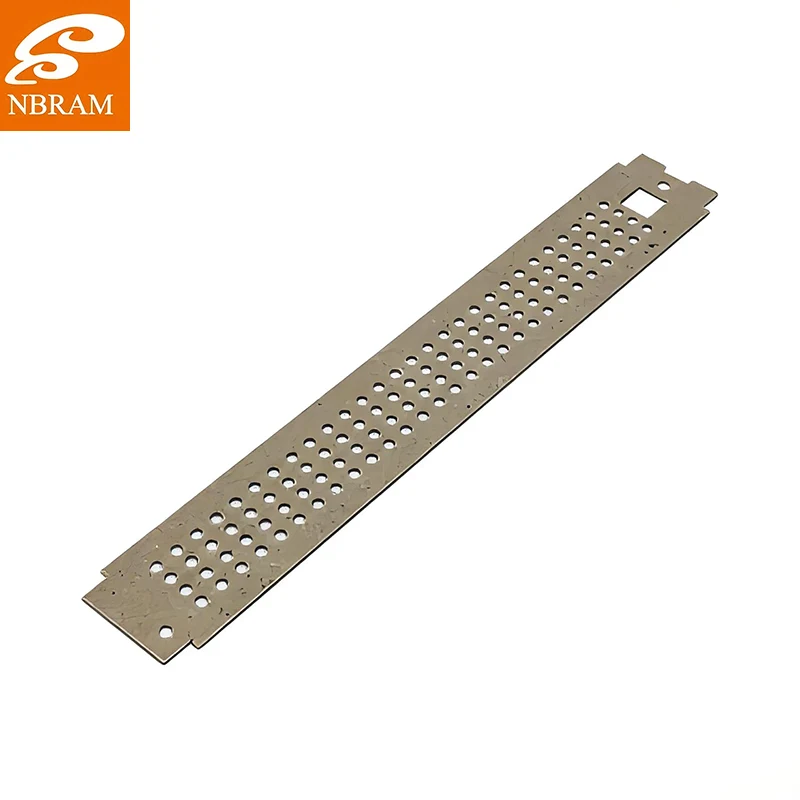
Different programmes stress different properties. High-frequency transformers for server power supplies care about stable capacitance under 100 kHz switching. EV charging systems care about surviving the coil winding operation and then holding insulation properties at higher operating temperature. Aerospace transformer work adds vibration on top of thermal cycling, where a hairline crack in a former becomes a certification problem rather than a yield problem.
Compliance acts as the second filter. Mica bobbins for Class H insulation systems are tested against IEC 60317 and UL 1446. During moulding, density consistency is tracked by real-time scanning, and random samples then run thermal cycling between -50°C and 850°C while insulation resistance and dielectric strength are monitored. Mounting brackets, cooling channels and integrated terminal blocks can be built into the moulding where a design needs them, rather than added as separate parts at assembly.
A handful of questions separates a workable component from a rework loop. What is the true continuous temperature at the flange, not at the core? Which winding direction and tension will the automated line run? Does the design need the full 5 mm to 100 mm diameter range, or a custom profile that saves space? And can the supplier show thermal-cycling data rather than one line on a datasheet?
NBRAM has produced mica and thermal-management components in Ningbo since 2004, with ISO 9001 and RoHS (2011/65/EU) in place and exports across Europe and Asia. Samples of mica electronic insulation bobbins are available for bench testing, including custom flange and slot configurations. Related components sit under Mica Insulation Assemblies, and the wider range is on the Mica Part page. Send the drawing and the operating temperature, and we can say fairly quickly whether a mica former is worth the change.