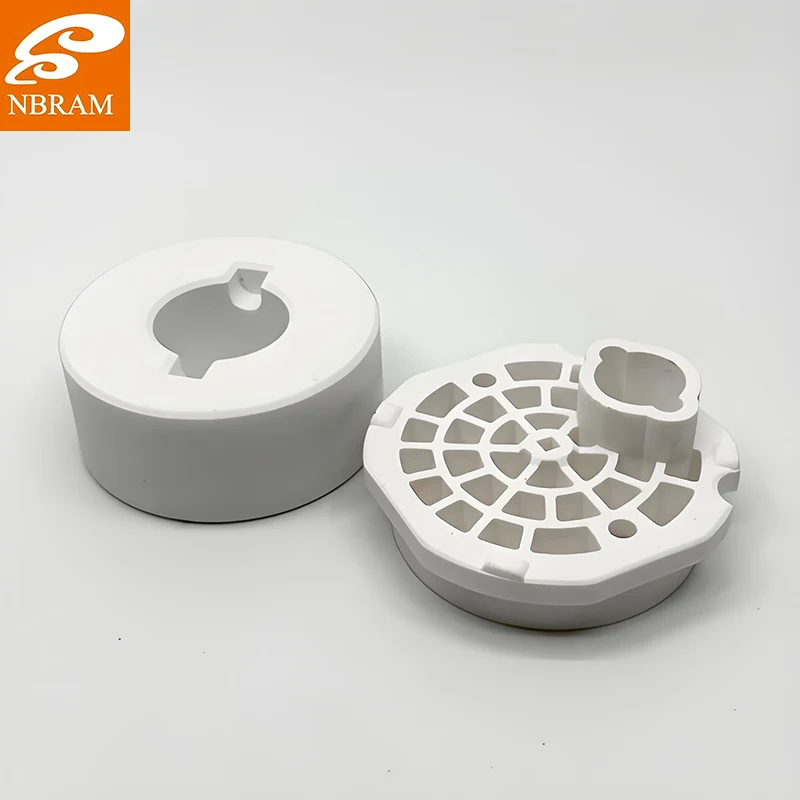

A heater is rarely killed by its element. More often the trouble starts just behind it, in the insulation board that has to hold the coil at a fixed distance from the shell, keep the outside surface cool enough to touch, and stop current from finding a path it should not take. Those three jobs are easy at room temperature. At 900°C they start to fight each other.
We make mica thermal insulation boards for that position in the stack. Here is how the board behaves in service, and how thickness, format and edge work get settled before a drawing reaches the press shop.
Thermal insulation and dielectric isolation usually want different things. Air insulates well but supports nothing. Dense ceramic supports everything but drains heat away from the element. Mica lands between the two, which is why it has stayed in heater construction for decades.
The figures on our board are unglamorous but useful: continuous service at 900°C, dielectric strength of 20-25 kV/mm held after repeated thermal cycling, thermal conductivity around 0.71 W/mK. A board that leaks heat into the outer shell pushes surface temperature up, and surface temperature is what the safety test measures, not the element temperature.
Expansion is held under 1% at operating temperature. On a 1000 x 600 mm panel that is a few millimetres across the long edge, and the mounting slots have to absorb it. Skip that allowance and the board bows, element spacing drifts, and a hot spot appears exactly where the coil sits closest to metal.
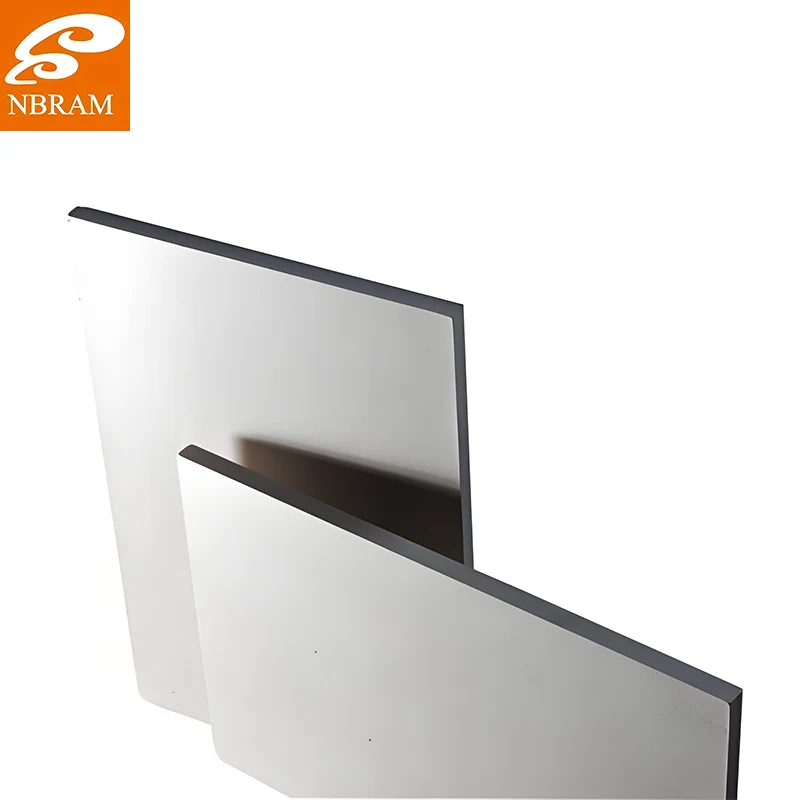
Our boards run from 1 mm to 10 mm. The choice is rarely about insulation value alone. Thin board, 1 mm to 2 mm, goes where space is tight and the job is a barrier rather than a structure: end plates, small appliance cavities, backing behind a reflector. It needs closer fastener spacing.
Mid-range stock, 3 mm to 6 mm, carries most heater builds. It holds screw threads and stamped cutouts without cracking, and it keeps the element at a real standoff from the casing instead of a nominal one. Above 6 mm the board becomes a structural part of the assembly, and weight, screw length and mounting layout all change with it.
Standard panels come in up to 1000 x 600 mm, with custom dimensions available. For most OEM programs we cut to the customer drawing instead of shipping full sheets, so nobody pays for mica that ends up on the floor as offcuts.
Mica selection decides most of the outcome before any bonding happens. Boards are built from mica with a consistent crystal structure, since mixed grades behave differently under heat and show up later as delamination along an edge. The bonding step is run so the natural thermal behaviour of the mica survives it: press and cure parameters are fixed per thickness, not adjusted by feel on the day.
Each batch then goes through thermal cycling in our own test ovens before it is released. The check: heat it, cool it, repeat, then measure dielectric strength and look for cracks, warping and separation at the cut edges. A board that survives one hot cycle and fails on the fifteenth was never really a 900°C board.
Most field failures we hear about are edge failures, not face failures. A punched hole with a ragged margin becomes a crack starter once the board expands and contracts a few hundred times. We deburr, and radius corners where the drawing allows. Edge treatment and mounting options are best fixed at drawing stage, not at assembly.
Cutouts also matter for creepage. A slot that looks generous on paper can leave less tracking distance once the terminal is fitted, so we check the finished profile against the customer's clearance requirement, not just the board outline.
Production runs on ISO 9001 procedures at our Ningbo plant, with RoHS (2011/65/EU) compliance on the material side, and boards ship to heater makers across Europe and Asia. If you are working through a new heater design, send the drawing and the operating temperature and we will come back with a thickness and edge proposal, plus a sample board for your own cycling test. Details are on the mica thermal insulation board for heaters page, and the wider range sits under formed mica plate and rigid mica sheet.