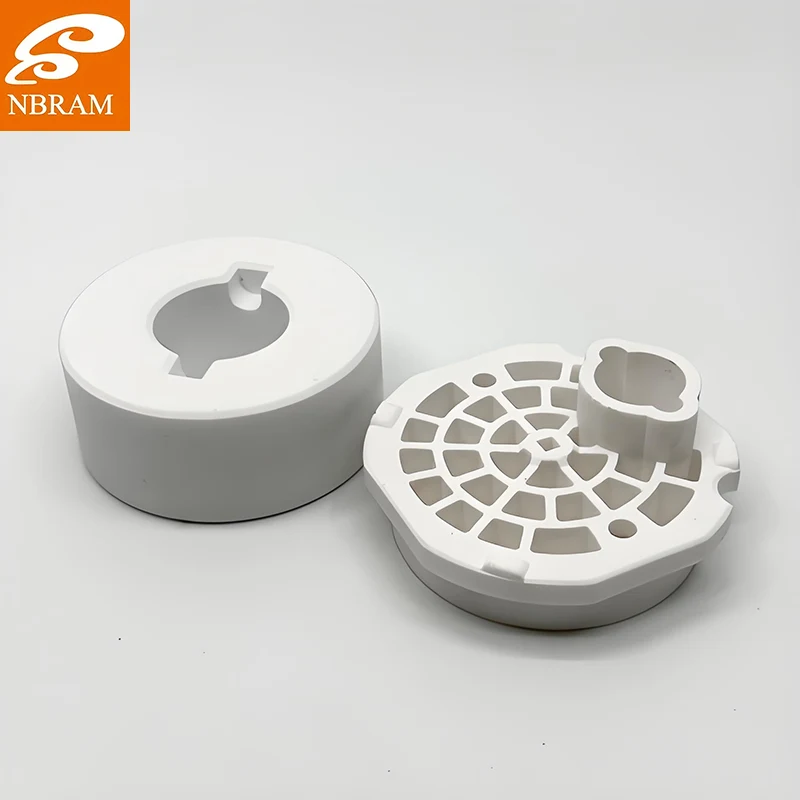

The braking resistor in a variable frequency drive does nothing for most of the shift. Then a conveyor decelerates, a crane lowers a load, or a spindle stops from full speed, and for a few seconds that resistor has to swallow the energy the motor is pushing back into the DC bus. Repeat that a few hundred times a day inside a cabinet that already sits at 60°C ambient, and you find out quickly what the ceramic core is made of.
This is the duty our cordierite wire wound resistors are built around. We have watched ordinary ceramic power resistors fail this way: the winding survives the first hundred cycles, then the body starts to craze, resistance drifts, and eventually the element opens. Cordierite changes that outcome because its thermal expansion coefficient is close to zero, so the fast swings that crack other ceramic cores never build up the same internal stress.
Braking and bleeder service is not steady state. Rated wattage tells you what a part can shed continuously, and the range covers 5W up to 500W, with resistance values from 0.1Ω to 100kΩ depending on size and configuration. What actually kills a resistor in this job is the cycle, not the average.
Heating duty is the other direction. In an industrial oven or a duct heater the resistor sits inside a hot zone, so ambient can already be 250°C before the element adds anything of its own. Continuous operation at up to 300°C is inside the design window for these parts, and the family is rated across -55°C to +300°C.
Cordierite has a near-zero coefficient of thermal expansion. That single property is why this core tolerates ramps that crack denser ceramic bodies. Our parts accept temperature changes of 200°C per minute without performance degradation, which is wider than the worst braking profile we normally see in a cabinet with restricted airflow.
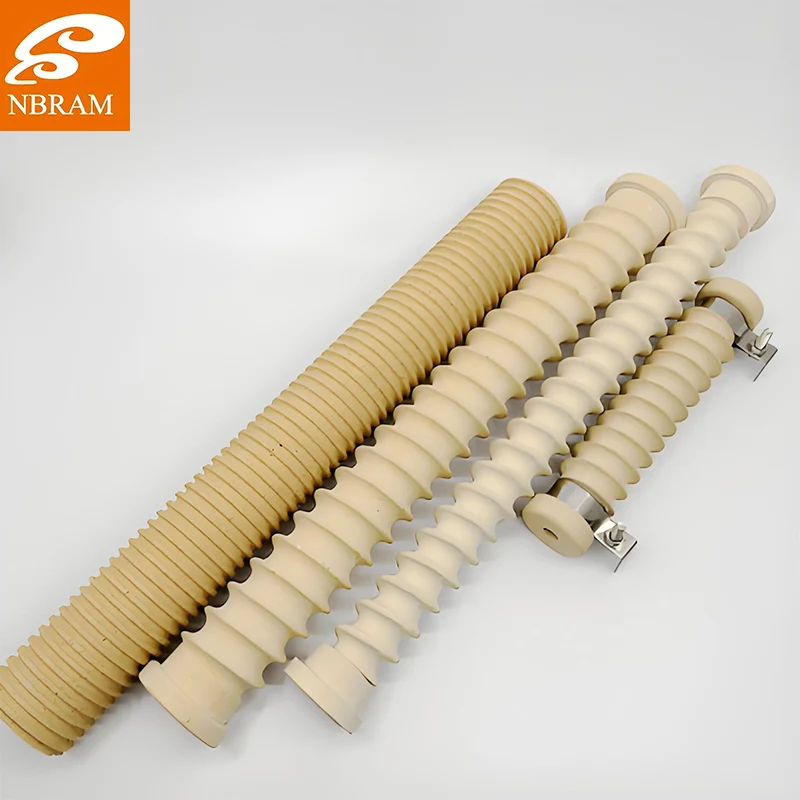
Where this matters on site: variable frequency drives, where the braking resistor has to hold a predictable value so the drive controls deceleration cleanly; power supply bleeder circuits that drain storage capacitors; and industrial heating elements that cycle with the process instead of running flat out.
Temperature coefficient of resistance is typically ±50 ppm/°C. Over a -55°C to +300°C working span that keeps the value where the circuit expects it, which is the reason a drive or a motor control does not need re-calibration every season.
Dielectric margin is generous as well. Breakdown voltage exceeds 2.5kV on most models, and insulation resistance measures above 1010 Ω at 500V DC. Tolerance options run at ±1%, ±2% and ±5%, so a precision control circuit and a coarse heater load can both come from the same cordierite core family with different acceptance limits.
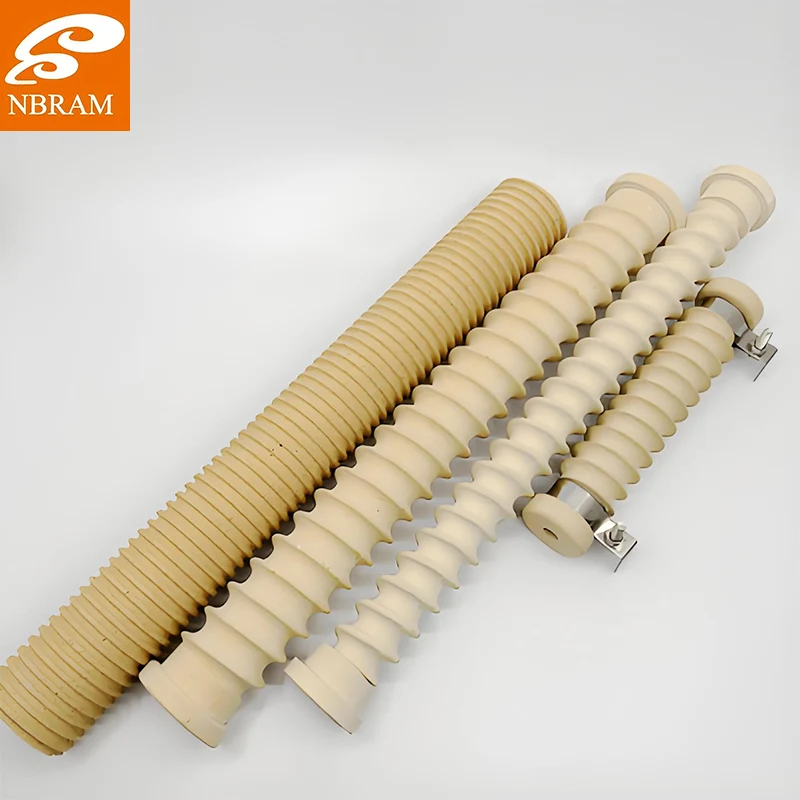
Production starts with high-purity cordierite formulations that are sintered to reach the target thermal and electrical properties. Winding runs on computer-controlled machinery that holds tension consistency within ±2%. That tolerance is not cosmetic: uneven tension shows up later as resistance instability under thermal stress. The resistance wire carries an enamel coating for electrical isolation before the core and winding are finished.
Every resistor then goes through 100% electrical testing at elevated temperature. On top of that we pull random samples for destructive testing to verify the bond strength between the resistance wire and the ceramic core, because a weak bond is the failure you cannot see at room temperature on a bench test. A high-temperature epoxy coat finishes the part, adding mechanical protection and a further layer of electrical isolation.
If you are sizing a resistor for repeated braking, bleeder or heater cycling, tell us the duty cycle, ambient and required resistance rather than the wattage alone. We can quote samples from the cordierite wire wound resistor range, and the surrounding families in heating and insulation ceramics and wear resistant ceramics are machined to the same tolerances if your assembly needs more than the resistor itself. Custom resistance values, lead configurations and mounting hardware are available on request.