
A high-voltage motor rarely fails gradually. It fails mid-shift, and the first thing the maintenance team hears is a trip signal. When that motor comes off the line for a rewind, the stator slots decide whether the job holds for the next decade or comes back in two years.
We build winding tape for that exact environment. Here is what the insulation really has to survive inside a 13.8 kV machine, and which numbers on the spec sheet are worth reading twice before you order tape for a rewind.
Steady state is easy. A motor at rated load sits at a stable temperature and a predictable voltage. The damage happens at the edges: direct-on-line starts, load swings, and transients riding in from the supply.
Every start pushes a current surge through the winding and a mechanical shock through the slot. Copper expands, the laminate compresses, and the interface between conductor and groundwall shifts a little. Repeat that a few thousand times and a tape that looked fine on the bench starts to show its limits.
So thermal class matters as much as the headline dielectric figure. Tape supplied for this duty is rated thermal class 155°C (F), which means the insulation is designed to keep its mechanical and electrical properties through repeated heating and cooling, not just sit at a comfortable temperature. Dielectric strength is specified above 35 kV/mm, real margin on a 13.8 kV system once field concentration at the slot corners is taken into account.
Ask any rewind shop what a failed HV winding looks like inside and the answer is consistent: a burn path starting at a void. Air pockets see a far higher local field than the surrounding mica, and partial discharge starts chewing at the resin from the inside out. Nothing visible happens for months. Then it does.
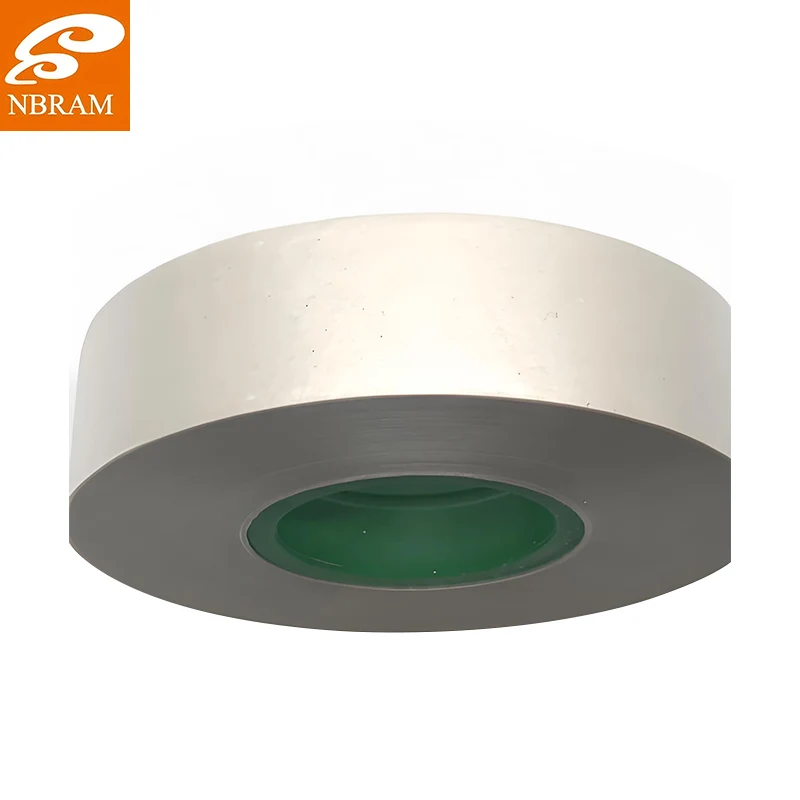
Vacuum pressure impregnation is how we handle it. Instead of a single dip, the process cycles vacuum and pressure so resin moves into the layered structure and displaces trapped air before curing. Over-saturation is a real risk in the other direction, because excess resin costs the tape its flexibility, and flexibility is what gets a coil through a tight slot.
Tape off our line is held to partial discharge below 5 pC. Each batch is tested for discharge characteristics, since a pinhole void can pass a simple voltage test and still turn into a long-term failure.
Rewinds are rarely textbook jobs. You work with the slot geometry already cut into the stator, and the tape has to fit without adding bulk that stops the coil going home.
Widths run from 15 mm to 50 mm and thickness from 0.13 mm to 0.25 mm, so the groundwall can be built to the design thickness instead of being squeezed around whatever single size is on the shelf. Thin tape in more passes gives a smoother build through the slot corners; wider tape cuts the pass count on a straight section.
Flexibility is the other half of it. Tape that cracks when it is bent around a coil nose is scrap, and a crack is a void. Our material bends while keeping the layered structure intact, which is what preserves the discharge performance after wrapping. Thermal cycling and mechanical stress testing confirm the tape holds its numbers once shaped, not only in the flat state.
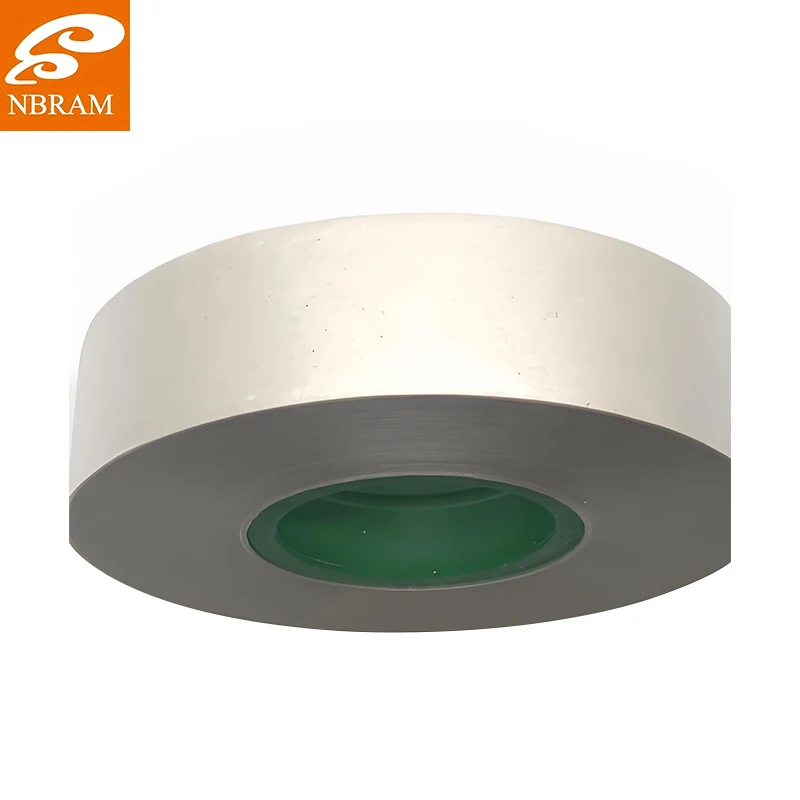
NBRAM has produced mica insulation in Ningbo since 2004, working to ISO 9001 quality management with RoHS (2011/65/EU) compliance, and shipping to buyers across Europe and Asia. Planning a rewind? Send the machine rating, slot dimensions and target wall thickness, and we will confirm tape width and build for your stator: Mica Tape For High-Voltage Motor Winding. Sibling options sit under Motor Insulation Mica Tape and the wider Mica Tape range.