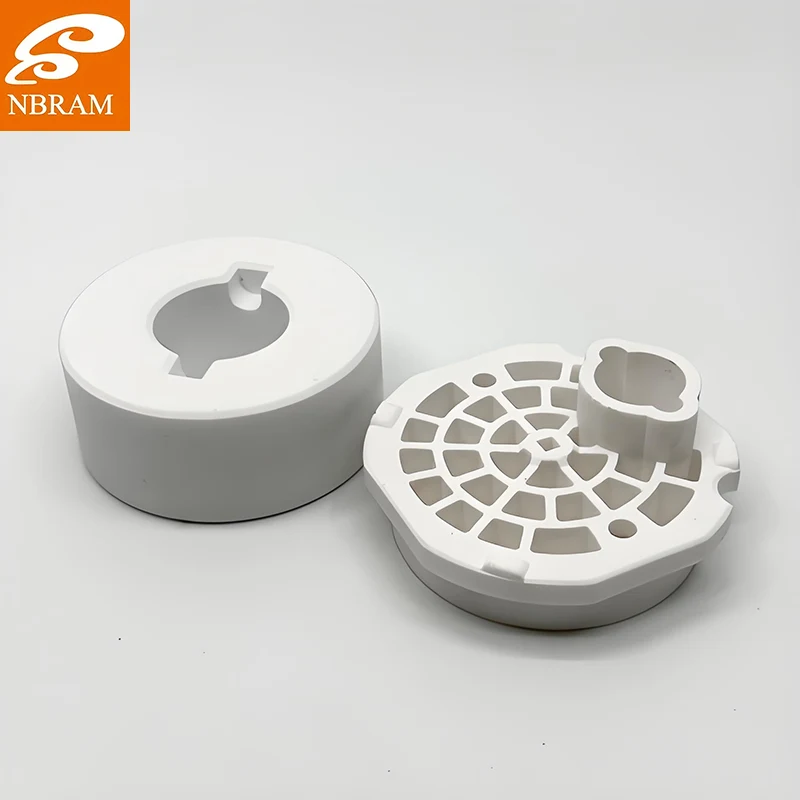

Heating elements rarely fail in a straight line. They fail where the support gives way first: a stamped part creeps under load, oxidizes, or quietly loses its insulating value until two live elements drift close enough to arc. In spiral, ribbon and cartridge heaters, the stamped mica support is the small part that sets that gap and holds it for the life of the appliance. Keeping it held at 850°C is the difficult part.
Two elements sit at a distance that was settled long before assembly, and the tolerance on that distance comes straight from the thickness of the stamped sheet between them. That is why thickness on this part is held to ±0.05mm. A support that arrives 0.2mm thick in one delivery and 0.15mm in the next moves the element pitch around, changing local watt density and narrowing the air gap that is supposed to stay dry and non-conductive.
Mechanical stability matters as much as the number itself. Once the element heats, the stack expands. A support made from a material that oxidizes or creeps through that cycle loses its true position, and the gap drifts a little more each time the heater switches on. Natural mica does not oxidize the way a stamped metal support does, so the geometry measured at assembly is still the geometry at 850°C.
Natural mica is a layered silicate, and the layers handle two jobs that a single-material support struggles to do together. It carries the element without deforming, and it insulates. Dielectric strength in the finished stamped part runs 18-22 kV/mm, and that figure is checked after repeated thermal cycling rather than only on a fresh sample. The number surviving the cycling is the part worth watching, because thermal stress is where cheaper supports start to behave differently.
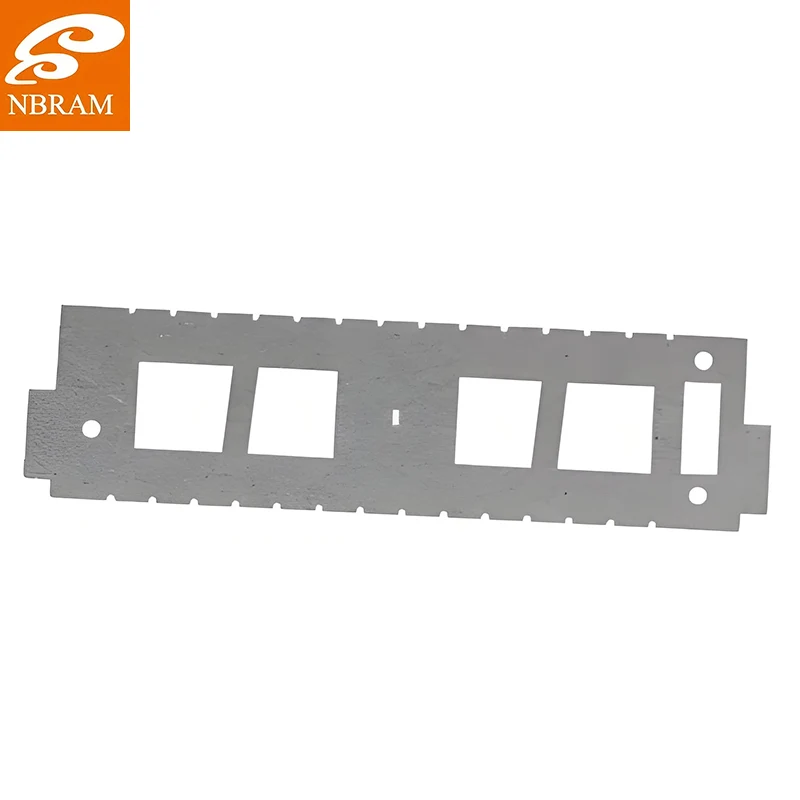
An 850°C continuous rating covers the duty found in most domestic ovens, industrial ovens and food processing equipment. Push past it and the answer is a different material grade rather than a thicker support.
You can learn a lot from a support by looking at its edge. Progressive dies ground to tight tolerance cut a clean profile. Worn tooling leaves a ragged one, and a ragged edge is where micro-cracks begin. Under thermal stress those cracks grow, and a cracked support changes thickness and dielectric behaviour exactly where the element is hottest.
Every piece is therefore inspected individually under magnification for micro-fractures before packing, and the mica is selected for consistent crystalline structure, since mixed mineral content stamps unevenly and ages at a different rate. Neither step is complicated. Both are why the same part still measures the same after a year in an oven.
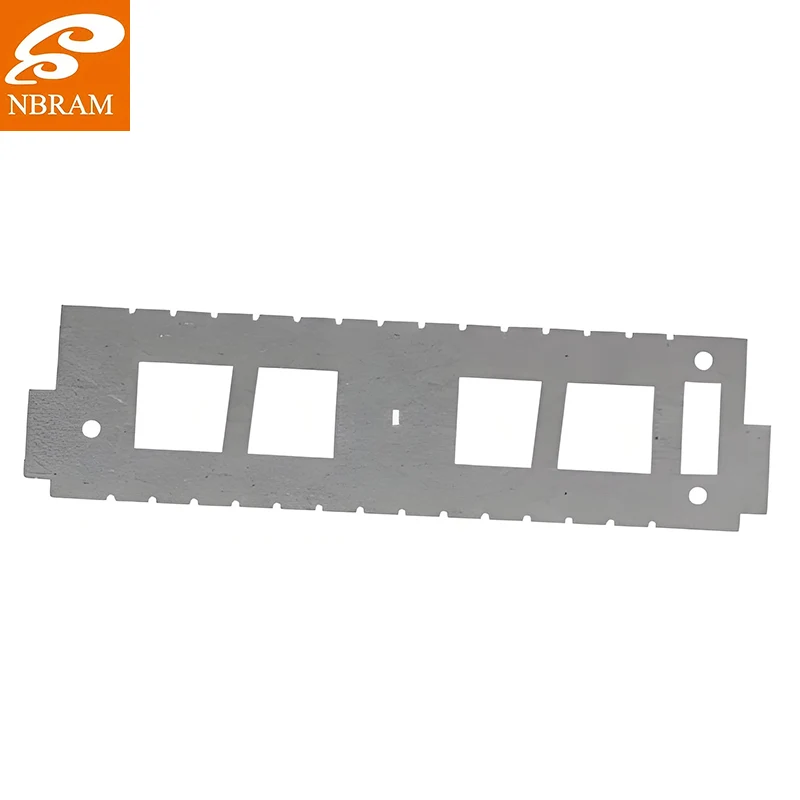
Standard patterns cover spiral, ribbon and cartridge heater builds. Custom stamping takes the rest: a support cut to your element drawing, in the sheet thickness and outline the heater actually needs, with no second supplier in the chain. Every batch is held to the same thickness tolerance, so a repeat order fits the fixture the first order was designed around.
Working temperature is the one figure worth settling early. Tell us the element type, the continuous duty temperature and the profile you need, and we will confirm whether natural mica at ±0.05mm is the right support or whether the duty calls for a different grade before a drawing is approved.
Specifications for this part sit on the Stamped Mica Support For Heating Element page. Related profiles are grouped under Stamped Mica Parts, and low-volume or one-off shapes run through CNC Machined Mica Components. Samples for testing and OEM production runs are both available.