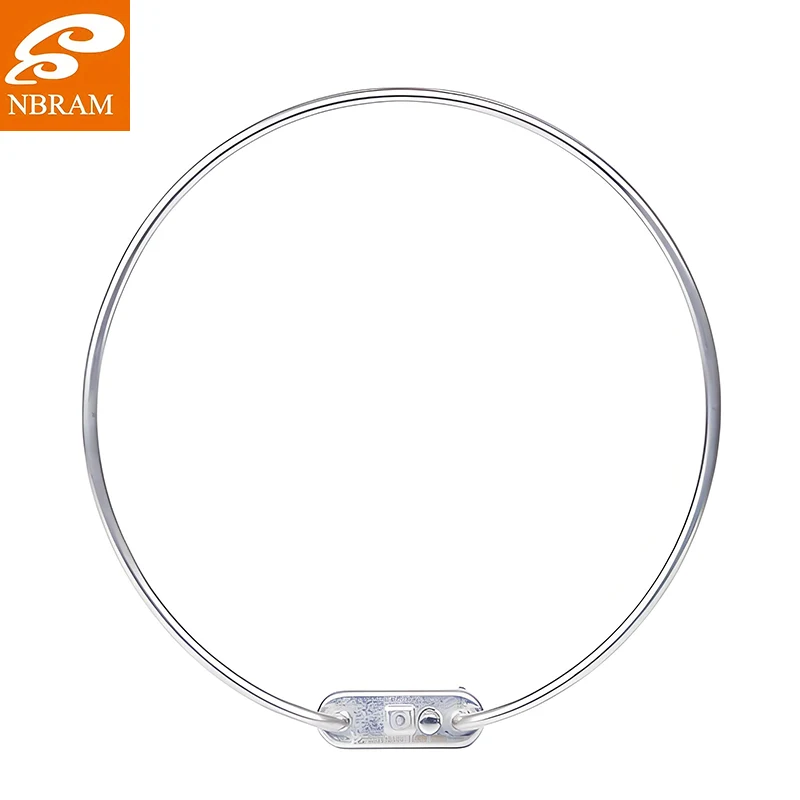
A washing machine heating pipe is a bent stainless tube with a terminal block on one end. Nothing about it looks difficult. Then it spends six years inside a drum that shakes, floods and fills with detergent foam, and the differences between suppliers start to show. Most of those differences were settled on a production line long before the part reached the appliance factory.
When an appliance OEM audits our tube line, the conversation usually lands in the same three places: the resistance window, the magnesium oxide fill, and what happens to the metal after bending.
Our washing machine heating pipes are rated 220-240 V AC at 1500 W to 3000 W, with a cold resistance of 15-35 Ω. That looks like a wide band on paper. On the line it is narrow, because a 1500 W element and a 3000 W element need different wire gauges and different coil lengths, and each has to land inside its own slice of the band.
Take a 2000 W pipe at 230 V. The arithmetic puts it near 26 Ω. Wind two ohms high and the machine heats more slowly, so the wash cycle stretches. Wind low and startup current climbs. Neither fault shows up in a photo of the finished part, which is why the resistance check has to run on every unit instead of a batch sample.
The resistance wire is a copper-nickel alloy, picked for a balance of conductivity and mechanical strength that plain stainless does not offer. Winding tension needs to stay even along the whole coil. Loose turns sit close to the sheath, tight turns sit further away, and the heat profile stops being uniform.
Between the coil and the sheath sits compacted magnesium oxide. It does two jobs at once, electrical insulation and heat transfer, and it only does them when the fill is dense. Air pockets are the enemy here. A pocket the size of a pinhead is enough to create a local hot spot, and a hot spot is where a heating pipe eventually dies.
We compact the fill in stages so it settles evenly along the coil rather than bridging in the middle. A triple-layer insulation arrangement around the coil keeps creepage distance where it belongs, at the ends, away from the wet side of the drum.
The tube arrives as cold-drawn stainless with a wall that stays consistent along its length. Bending is where that consistency earns its keep. A thin wall on the outside of a bend stretches, and stretching is the first step toward a crack that opens months later under thermal cycling.
After forming, the part goes through stress relief annealing. The metal is held at temperature and cooled slowly, which releases the internal stress that bending put in. Skip that step and the bend keeps a residual load. Add a few thousand heat cycles and micro-cracks begin at the outside radius. In our workshop the anneal is a process step, not a finishing touch.
Sealing comes next. The terminal end is where water usually finds its way in, so the seal is tested rather than assumed. The finished pipe carries an IPX7 rating, which means it can be fully submerged without water reaching the element.
Modern detergents are aggressive, and the sheath takes the worst of it. A titanium coating puts a harder, more chemically resistant layer between the stainless surface and the wash liquor, so the pitting that turns into pinholes takes far longer to start. Keep the sheath surface intact and heat transfer stays where it was on day one.
None of this is exotic work. It comes down to wire gauge, fill density, bend radius, anneal and coating, repeated the same way on every unit that leaves the line.
If you are sourcing heating pipes for a washing machine program, send the drum geometry, voltage, wattage and terminal layout. We build samples against your drawing before a production run starts. Details sit on our washing machine heating pipe page, and the wider range is under tubular and cartridge heaters. Bent forms such as our M-shaped heating tube follow the same process route.