
Put a metal-sheathed heater through a furnace cycle that drops from 800°C into room-temperature water and the failure modes arrive in a predictable order. Oxidation first, then coil sag, then a short. Ceramic heating elements behave differently in that test, but only when the ceramic was chosen for the duty rather than picked because "ceramic" sounds tougher.
Why they behave differently comes down to two properties that rarely get discussed together: how hot the core can run, and how fast it can be cycled without cracking. Alumina and silicon carbide answer both questions with numbers instead of adjectives.
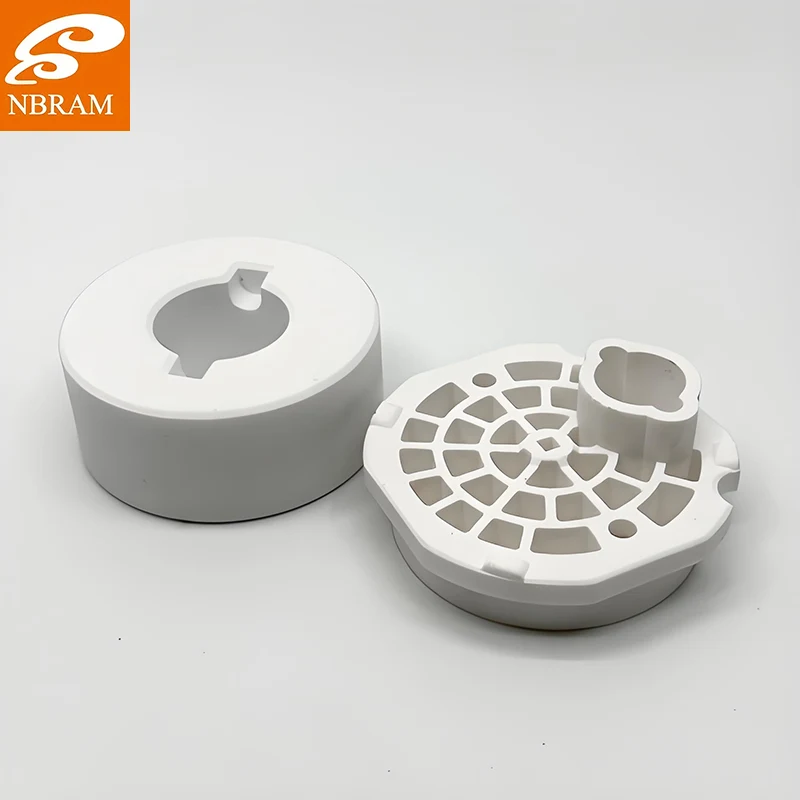
The winding is not what limits a ceramic heating element. The core is. NBRAM builds these on alumina at 96% to 99.5% purity for standard duty, which holds a working ceiling of 800°C.
Move to silicon carbide and the same element class reaches 1,200°C. For aerospace work, a molybdenum disilicide coating pushes the surface to 1,500°C and keeps oxidation in check.
Power density runs 10 to 40 W/cm², and that figure depends on surface treatment and how well the element is cooled. Resistance tolerance is held to ±5% as standard, tightened to ±1% where the control loop is sensitive. Rated life lands between 5,000 and 20,000 hours, but only if the element is not asked to run above its rated temperature.
A heater that sits at temperature is easy to design. A heater that gets quenched and reheated is where designs fail. Ceramic heating elements survive that cycle because of how the core is built.
High-purity alumina or silicon carbide powder is isostatically pressed at 150 MPa into a dense green body, then sintered between 1,600°C and 1,800°C in an atmosphere-controlled kiln. The result sits above 98% theoretical density. Density is what stops a microcrack from finding a path through the wall.
Thermal shock resistance above ΔT 500°C is the specification to look for, tested per ASTM. NBRAM cycles each element between 800°C and room-temperature water and rejects any unit showing microcracking. Platinum coils go onto ceramic formers for extreme temperatures, nickel-chromium covers cost-sensitive models, and a secondary sintering step encapsulates the winding into a hermetic seal.
Semiconductor diffusion furnaces are the clearest case. Silicon carbide-coated elements hold 1,000°C for months at a time without degrading, which matters for dopant activation, where temperature drift ruins a batch.
Food packaging machinery asks a different question. Alumina ceramics approved for food contact resist fatty acids and steam, and the ceramic approach there cuts energy use by roughly 20% against metal heaters, while staying easier to clean.
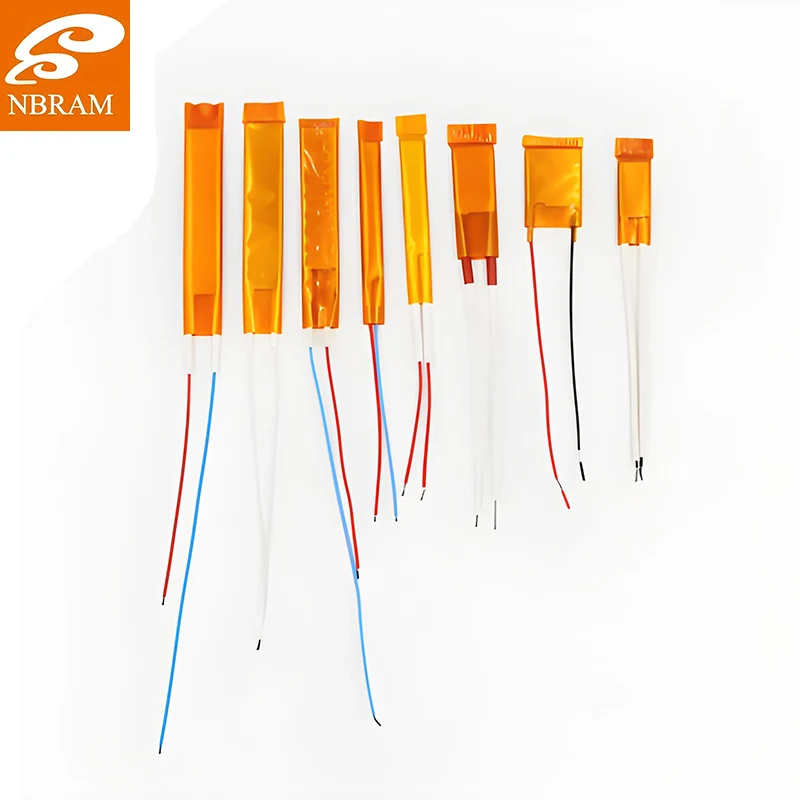
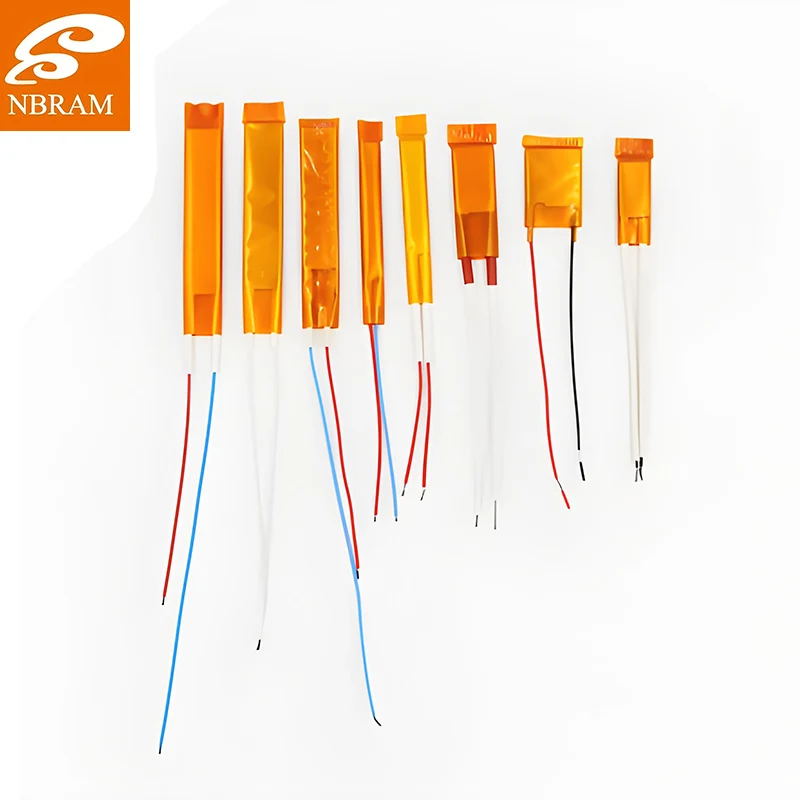
Automotive engineers use PTC ceramic discs for EV battery preheating. The self-limiting power curve is the whole point: as the disc warms, resistance rises and current falls, so the element throttles itself before it overheats. Porous ceramic variants spread heat evenly through industrial dryer air streams, and fast-response ceramic heating element cartridges sit inside 3D printer hotends.
Terminal style decides how the element lands in your assembly: threaded studs, ceramic lead channels, or flying leads with braided insulation. Certifications worth confirming up front are UL 1030, IEC 60601 for medical equipment, and ISO 9001 at plant level, plus material traceability if your customer audits the supply chain.
Customization is usually where cost gets saved. Drilled passages for thermocouple integration remove a separate sensor pocket. Machined grooves increase surface area for convection heating. Elements ship as tubes, plates, or fully custom geometries, and coil winding runs on ceramic formers under robotic control so resistance holds across the batch.
NBRAM has made mica and ceramic thermal parts in Ningbo since 2004, and the same material science team handles both.
The plant works under ISO 9001, materials comply with RoHS (2011/65/EU), and product ships to customers across Europe and Asia. One European industrial oven manufacturer reported more than three years of continuous service in glass tempering lines with these elements, roughly double the life it was getting from its previous supply.
If a design has a temperature, a cycle, or a corrosion problem that metal heaters keep losing, the ceramic heating element product page lists the full specification range, and the PTC heater category covers the self-regulating side of the family.
Samples and OEM customization start with an inquiry: bring the working temperature, the atmosphere, and the geometry, and the material choice usually follows quickly.