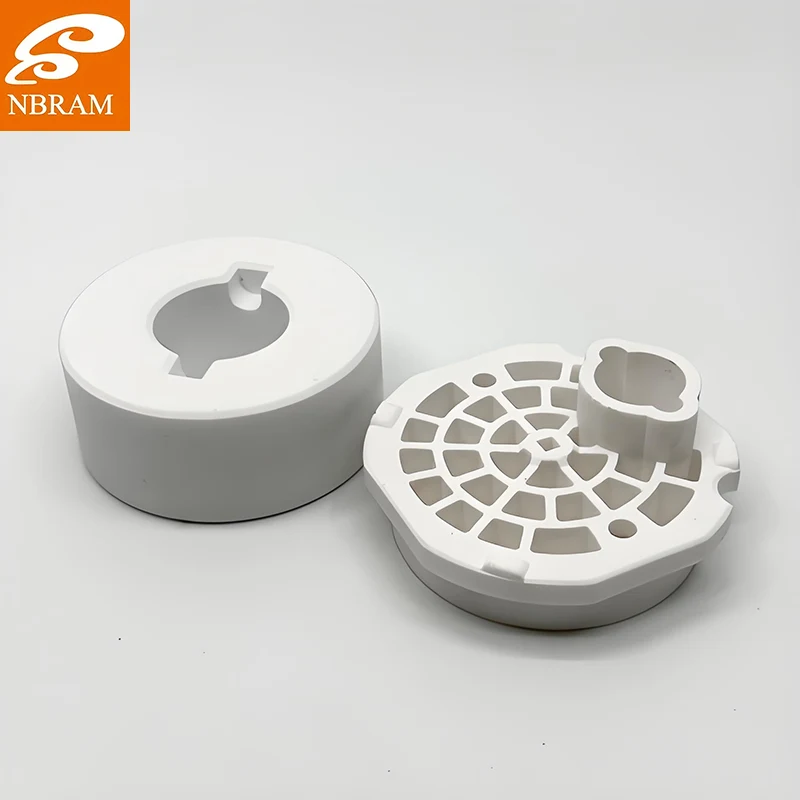

Rigid mica sheet is easy to respect and hard to install. It insulates superbly, holds up to heat, and then refuses to bend around a coil the moment you need it to. For motor and transformer builders that limitation is not a small one. It is the reason NBRAM puts real engineering effort into its flexible mica roll.
A flexible mica roll is not simply a thinner version of mica sheet, and it is not loose mica paper held together by luck. The working idea sits in the bonding matrix between the mica platelets. When the roll bends, individual flakes are allowed to shift slightly under the strain while the matrix keeps the structure electrically continuous. Bend it, and the insulation path stays intact.
Mica is a layered mineral, and its natural structure is both a gift and a problem. The layers give it outstanding dielectric properties, but a rigid block of them cracks when forced around a radius. Controlling how the layers move relative to each other, instead of fighting that movement, is the way out. NBRAM builds flexible mica roll on exactly this principle: a specialized bonding process lets the platelets move independently while the material keeps its electrical integrity.
Thickness runs from 0.05 mm to 0.15 mm, thin enough to follow tight radii yet strong enough for production handling. Minimum bend radius reaches 2 mm without cracking or delamination. That figure matters on the shop floor, because it decides whether a roll can wrap a small-diameter heating element or a crowded winding end turn without a crease turning into a fault.
Any insulation can look good before it is flexed. The honest test is what remains after repeated bending. Dielectric strength on this flexible mica roll holds at 25-30 kV/mm even after the roll has been flexed again and again, with volume resistivity around 2.0×10¹⁵ Ω·cm at standard conditions.
Mechanical figures explain the balance the material has to strike. Tensile strength sits between 120-150 N/10 mm of width, with elongation at break of 8-12%. Too soft a build and the roll would deform in service; too stiff a build and installation in confined spaces becomes the bottleneck. The thermal side holds up to 800°C, which keeps the roll relevant in applications where heat and tight geometry arrive together.
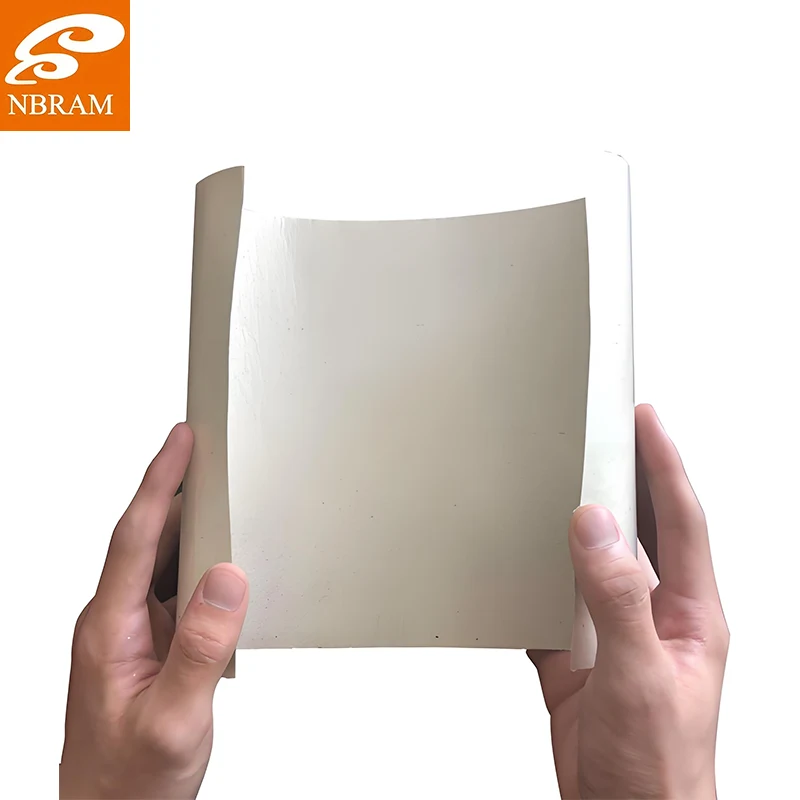
The clearest wins show up where rigid insulation simply cannot go. In electric vehicle motor production, technicians wrap the roll around tight corners that would fracture conventional mica. Transformer and coil manufacturers use the same material to follow irregular shapes, and the vibration resistance earns it a place in aerospace assemblies where both space and reliability are non-negotiable. In every case the pitch is the same: conform to the geometry, keep the dielectric strength.
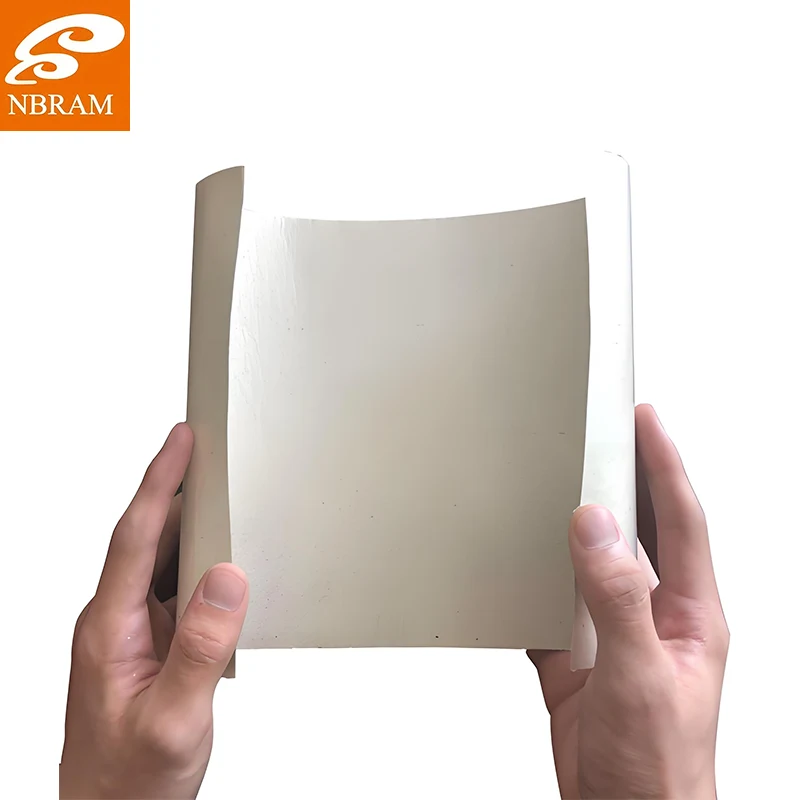
Flexibility is not left to chance on the production line. What we call controlled flexibility engineering adjusts the bonding matrix composition for the target application, so a roll for a tightly wound coil does not behave like a roll for a flat lamination stack. Every batch goes through flex-cycle testing that simulates years of installation and operating stress before the material is approved to ship.
Winding is done under tension control so the roll itself carries no hidden stress, and the cores and protective packaging are specified to preserve flexibility during storage and transport. All of it happens under ISO 9001 control at the NBRAM plant in Ningbo, a factory that has made mica-based insulation since 2004 and ships to customers across Europe and Asia.
If a winding, coil or heating element in your design will not accept a flat sheet, the flexible mica roll product page lists the available thicknesses and widths. For the wider product family, the mica roll category covers related constructions. Samples are available through the inquiry page, and specifying the bend radius and working temperature up front usually shortens the conversation considerably.