
Most heater failures on a food line or a packaging machine are not electrical. Heat lands unevenly, a sealing jaw runs cool at one end, or the housing starts pitting in a washdown room. An aluminum heating element addresses both problems at once, and the reasons sit in the metal rather than in the controls.
The units we build cover duties from gentle product warming to hard industrial heating. Below is where the aluminum body earns its place, followed by the numbers worth checking before you specify one.
A resistance wire in a narrow sheath has to move heat through a small contact area. An aluminum body works the other way. With thermal conductivity of 200-220 W/m•K it pulls heat off the wire and spreads it across the whole working face.
Two process details decide whether that works in practice. Isothermal extrusion keeps the grain structure consistent along the length, so the far end of a long plate does not run cooler than the near end. Wire embedding then closes the air gaps that would otherwise turn into hot spots and short wire life.
Measured on the surface, the result is around ±3°C uniformity across the face. On a sealing jaw or a warming plate, that is the difference between a repeatable seal and a wavy one.
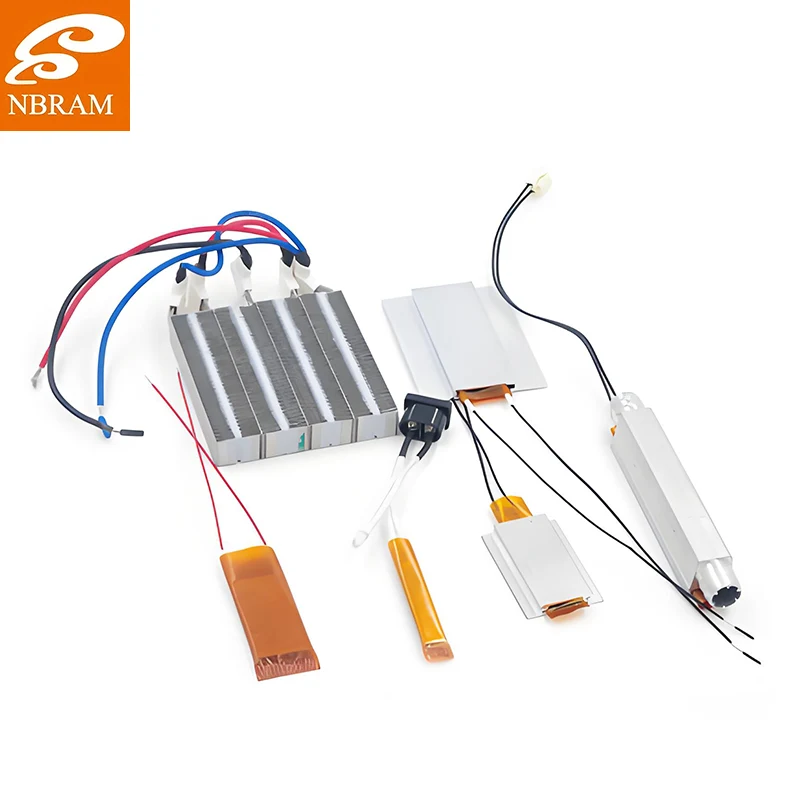
Our standard range runs 5-25 W/cm², and that span covers quite different jobs. At the low end you get gentle warming for medical equipment or food holding, where scorching the product is the main risk. At the high end the element is expected to drive a hot plate or a mould face hard, and the build has to survive it.
Two more numbers help you place a duty correctly. Operating temperature reaches 450°C, and thermal response comes in under 60 seconds. A fast cycle with a short dwell needs that response. A large thermal mass does not, and paying for speed you cannot use only adds cost.
Oversizing is the common mistake. Too much watt density for the load gives burnt product at the edges, oxidation on the wire and a shorter service life. Undersizing shows up differently: the surface never reaches setpoint inside the cycle, the line runs slow and the controller stays energised.
Aluminum carries its own corrosion resistance, and an anodized layer adds a barrier on top. That matters in food processing and packaging halls, where washdown water, detergent and salt-bearing air are normal rather than exceptional.
Alloy choice belongs in the specification, not in purchasing. We use aluminum grades with controlled magnesium content, because commercial-grade stock can pit in salty conditions where a controlled alloy holds up. If your element sees steam, brine or regular cleaning chemicals, say so at inquiry stage and the coating gets matched to it.
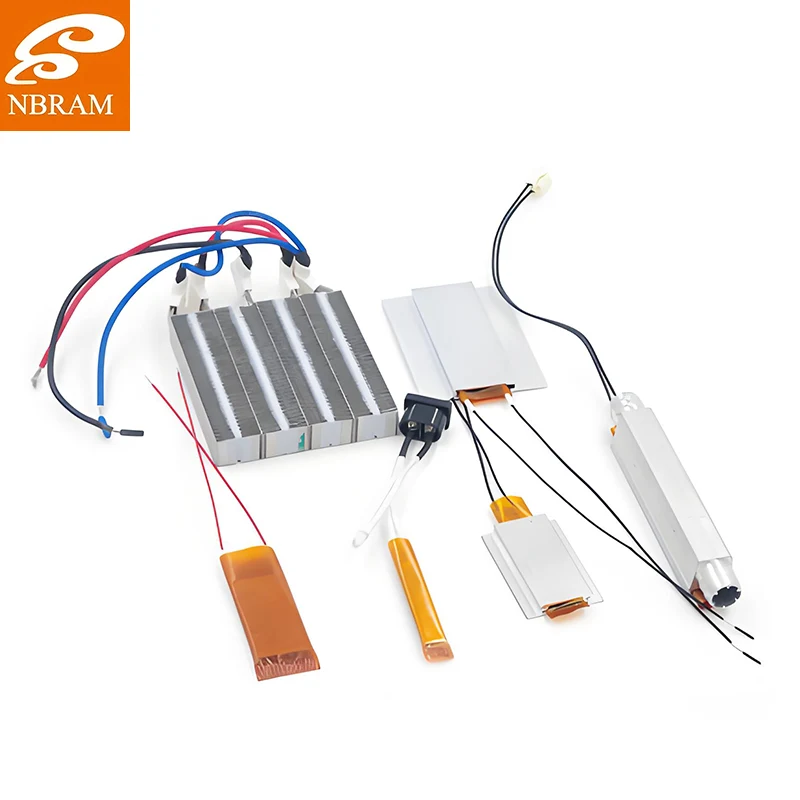
Four values cover most of what you need: watt density, maximum operating temperature, surface uniformity and resistance tolerance. The last one is easy to overlook. We hold resistance to ±3% across batches, which keeps a replacement element behaving like the one it replaces instead of shifting the setpoint of the whole line.
Ask how the element was tested, too. Thermal cycling that compresses years of service into days exposes weak wire embedding and marginal anodizing far faster than a single bench check at room temperature.
If you are weighing aluminum against mica or ceramic construction, the deciding factors are usually the working atmosphere and how quickly the surface must recover. Send the duty: face size, target temperature, cycle time and what the air contains. We will come back with a watt density and a drawing. Start from the Aluminum Heating Element page, or look through PTC Heater and Tubular and Cartridge Heaters for related builds.