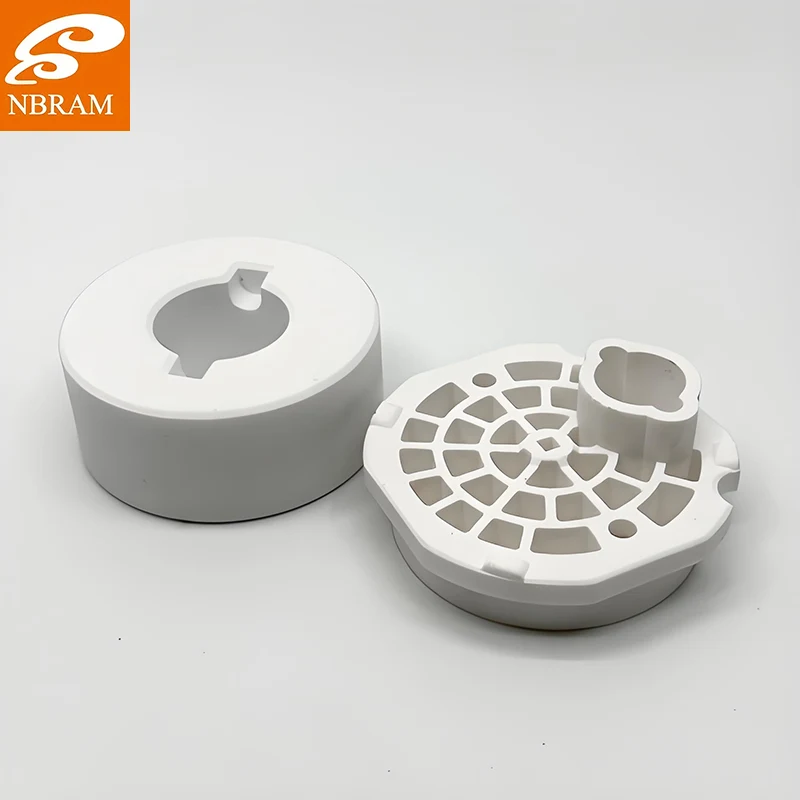

Spark igniter electrodes fail in ways that are obvious after the fact and hard to predict from a drawing: a crack down the ceramic, a conductive track where dust collected, a gap that quietly widened. Most of those failures begin in pressing and firing, long before the electrode ever sees a flame. NBRAM has been pressing mica and ceramic insulators since 2004, and the checks described below are the ones that catch an alumina igniter problem while it is still cheap to fix.
Two numbers decide almost everything on an igniter. Our alumina ceramic spark igniter electrode holds a dielectric strength above 15 kV/mm at room temperature, and still above 8 kV/mm at 1,000°C. The hot figure is the one worth watching. A ceramic that insulates well cold but leaks once the burner is running will spark weakly, or track across the surface instead of across the gap. Volume resistivity is specified as more than 1014 Ω·cm at 500°C for the same reason. Leakage current drains spark energy before the fuel ever sees it.
Electrode gaps are held between 2.5 mm and 6.0 mm depending on fuel and burner geometry, with spark energy up to 3 J per spark. Difficult fuels such as heavy oil or coal dust need the wider end of that window, because a marginal spark will not light them no matter how good the rest of the burner is.

The body starts as alumina powder controlled at 95% ± 0.5%, filtered in several passes to remove the particles that would later become weak points. Pressing runs at pressures above 200 MPa. Density bought here shows up as surface finish and mechanical strength, and it also decides how the part behaves under thermal load. Igniters pressed at lower density tend to crack from thermal stress, so this is not the step to economize on.
Firing is a shaped profile, not a single soak temperature. The kiln holds at critical points so the crystal structure can develop properly, and the ramps are set to avoid the thermal gradients that warp a part or lock internal stress into it. Finished parts tolerate temperature changes up to 800°C per minute, which is what allows an igniter to go from ambient to glowing hot without cracking.
Spark testing at elevated temperature runs on each igniter, not only on the first article. That is how a gap set slightly wide, or an insulator that leaks only once warm, gets caught before shipping. Alongside that, samples from every production batch go through destructive testing to verify internal integrity. Porosity and firing defects are much easier to argue about in the workshop than in a customer's furnace three months into a campaign.
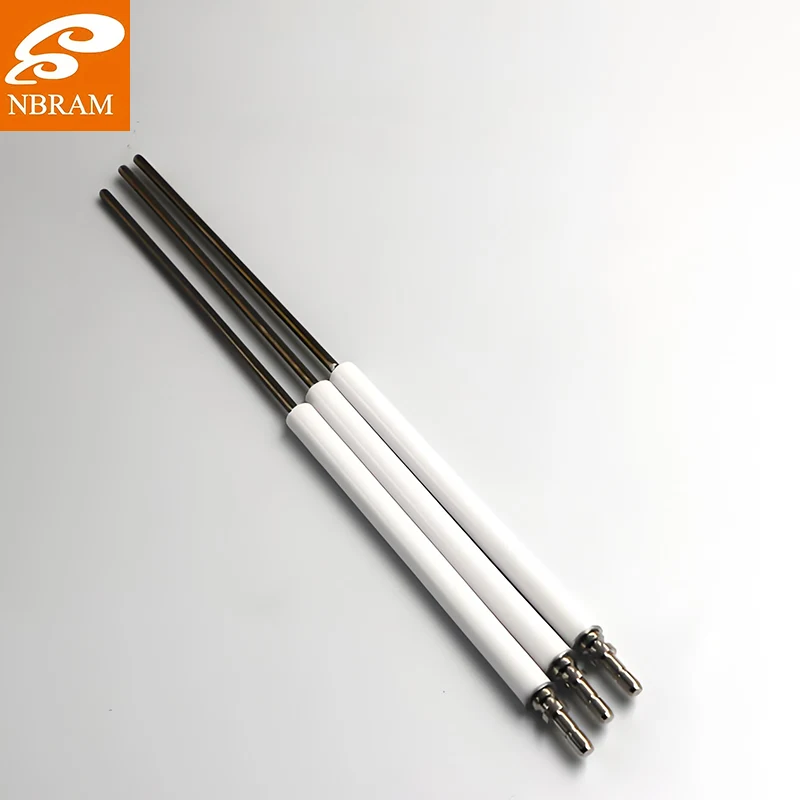
Ask for dielectric strength at operating temperature, not only at 20°C. Ask for volume resistivity at the temperature your burner actually reaches. Ask how the electrode gap is measured and what tolerance is guaranteed. Ask whether spark testing is done hot, and whether any destructive sampling happens per batch. A supplier who has those answers ready is usually the one controlling pressing and firing. One who quotes a single catalogue kV/mm figure may simply be buying from whoever is cheapest that quarter.
If you are replacing igniters every few weeks, or chasing tracking faults across a ceramic surface, send us the operating temperature, the fuel and a burner drawing. We press and fire to drawing, run a sample batch, spark test it hot and ship from our Ningbo plant with ISO 9001 and RoHS (2011/65/EU) documentation. Sample orders and OEM runs are both welcome. Specifications for the Alumina Ceramic Spark Igniter Electrode sit on the product page, and the wider Wear Resistant Ceramics and Industrial Ceramic ranges cover the rest of the kiln furniture and lining parts we make.