
A thermostat lands on a workbench with a datasheet that fits on one page. Range, switch rating, a differential figure. That is usually enough to place an order, and rarely enough to know whether the part will still hold its setting two years into the job.
We have built bimetal thermostats in Ningbo since 2004, and the calls that reach us after installation are hardly ever about the headline range. They are about the figures further down the sheet, the ones that describe behaviour above and below the setpoint.
Our adjustable thermostat family spans -30°C to 300°C, and that span is the widest box we draw, not a claim that one unit performs equally across it. Cold-side models carry lubricants chosen so the mechanism does not stiffen when ambient sits below freezing for weeks at a time. High-temperature versions use contact alloys picked to resist welding when the contacts arc under load. The housing family is shared. The internals are not.
Housing choice matters as much. Die-cast aluminium cases are powder-coated to shrug off chemicals, moisture and repeated temperature cycling, and the terminal blocks are solid brass with silver-plated contacts, so terminal resistance does not climb over the service life. Bimetallic strip is cut and matched to each temperature band instead of being pulled from one generic bin. Two thermostats that look identical from the outside can therefore behave quite differently at the ends of their rating.
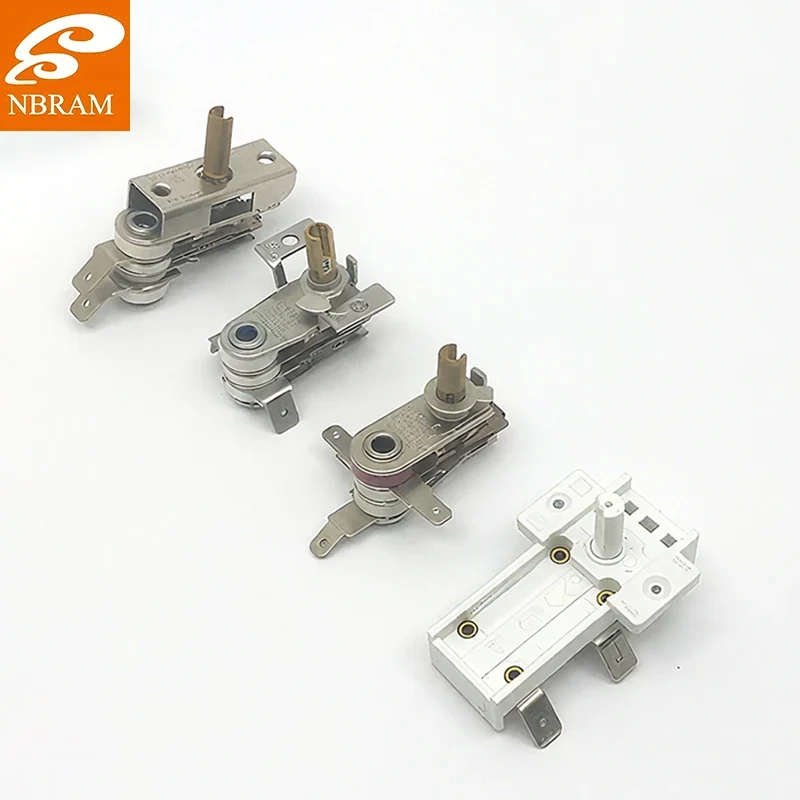
Setpoint is where the contacts open. Differential is the gap between cut-out and cut-in, adjustable from about 1°C to 5°C depending on model and process, and it is the figure buyers most often leave blank. Tighten it on a compressor and the unit short-cycles toward an early failure. Widen it on a tempering bath and product quality scatters while the heater plays catch-up.
Ours use a snap-action switch, so the moving contact crosses the trip point in one motion rather than crawling across it and arcing the whole way. That one design decision is what keeps a 2°C differential from quietly becoming a 6°C differential after a season in the field. The sensor compartment is hermetically sealed, which stops ambient humidity and draughts from pulling the reading away from the process value.
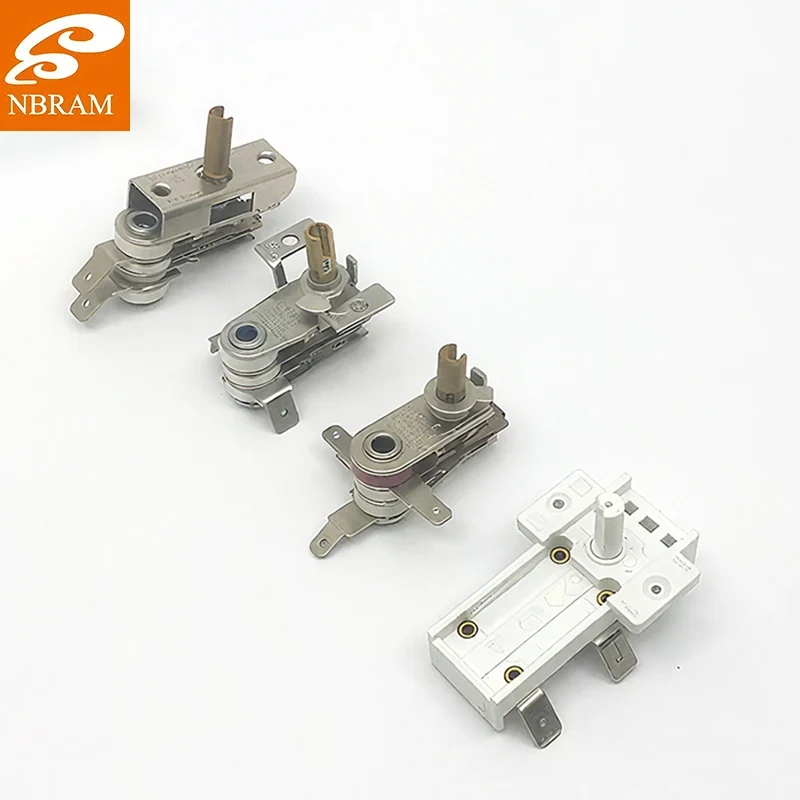
A 16A nameplate reads generous until the load contains a fan motor. Our 16A models are tested at 20A continuous precisely so that margin survives inrush on inductive loads, and a design that cycles often is better served by sitting at 70-80% of the rating than at the edge of it. Sensor placement deserves the same discipline: how much metal and air sit between the sensing element and the heat source changes the temperature the process really sees, which is how a correctly set thermostat still ends up blamed for the wrong result.
Calibration runs in computer-controlled ovens that ramp at 0.1°C resolution, with readings taken at 50 points across the working range. Checking only the marked temperatures says very little. What keeps a process in control at 40°C and at 240°C alike is linear response across the whole scale.
After calibration, every thermostat goes through a 24-hour burn-in at both temperature extremes. Five set points are re-tested and the differential confirmed inside spec, typically 1-3°C depending on the model. A calibration certificate, installation guidance and maintenance notes travel with the part, because a good thermostat installed badly still stops a line. Most orders ship within 10 working days, and standard models can be rushed when equipment is already down.
If you are specifying temperature control for an oven, a chiller or a process bath, send us the operating window, the load profile and the swing the process tolerates. We will come back with the range, differential and mounting that fit, plus samples for bench testing before you commit to production. The Adjustable Thermostat page lists the ranges we build, while the Bimetal Thermostat category covers the rest of the family, from the Snap Action Thermostat to the KSD 9700 Series.