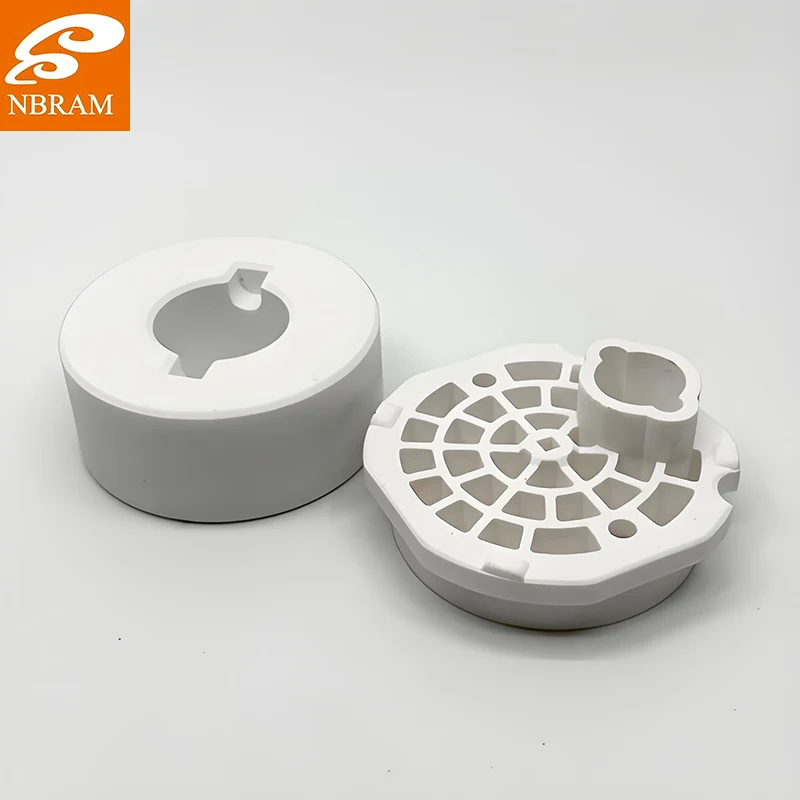

A cement transfer chute and the inlet box of a coal-fired power plant cyclone have little in common on paper. They fail the same way, though. The steel behind the flowing material thins out, a hole opens, and the line stops for a repair nobody scheduled. Alumina ceramic liner plates are the part that absorbs that wear instead, and whether a liner lasts or spalls comes down to a few measurable things.
Wear in a chute is not one mechanism. Directly under the loading point you get impact, with lump ore or clinker landing at speed on a small area. Further down the slope the load turns into sliding abrasion, slower but continuous across the whole surface. A material picked only for hardness will crack where it should have taken the blow.
Our standard alumina ceramic liner plate runs 92-95% Al2O3 at 85-90 HRA, roughly 9 on the Mohs scale. Density is held at 3.6-3.8 g/cm³ and compressive strength is above 2,500 MPa. In ASTM G65 abrasion testing the loss comes in below 0.0003 g. The working range is -50°C to +800°C, which puts hot clinker and fly ash inside normal duty rather than at the edge of it.
Why does density get so much attention here? Porosity is the answer. A plate pressed to 3.6 g/cm³ leaves fewer interconnected pores for abrasive fines to attack from the inside out, and that is the failure mode you cannot see from the outside until a corner lets go.
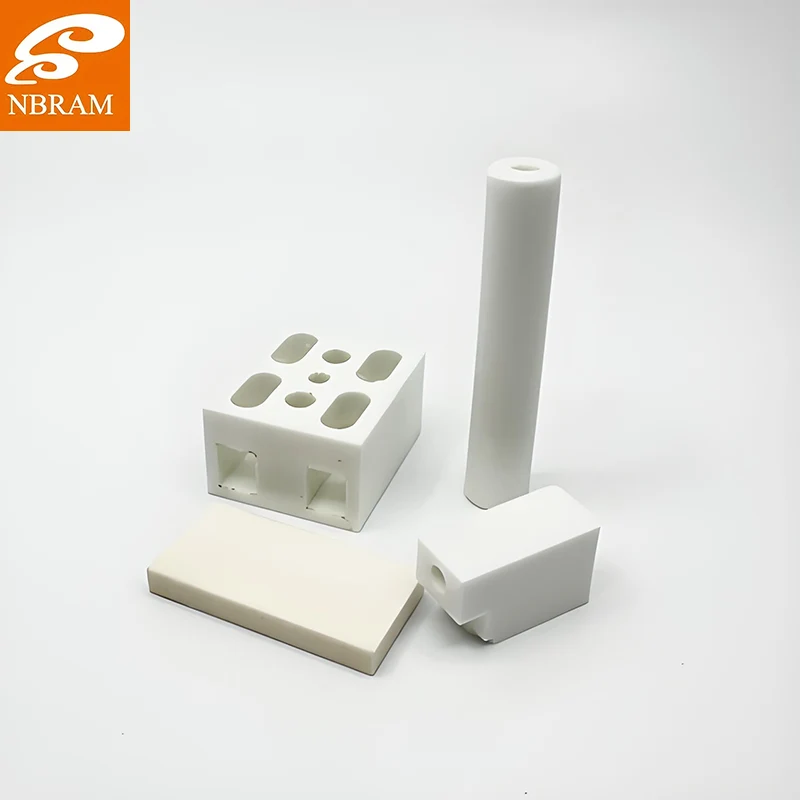
Liner plates go in as a mosaic of 100x100mm to 200x200mm tiles, 10mm to 40mm thick, with mounting holes positioned for the structure behind them. The interlocking edge profile is the part buyers tend to underestimate. A plain butt joint leaves a line where fine material works its way behind the plate, and once that starts the tile is being pried off rather than worn away.
Machined edges held to 0.1mm keep those gaps tight. There is a maintenance argument too: a single worn tile can be replaced on its own, without cutting an entire panel out of a chute that has already gone back into service.
The plate is only as good as its firing. Alumina powder blends are checked on arrival, pressed on 300-ton hydraulic presses, then sintered in computer-controlled kilns where the profile stays within ±5°C of target. Crystal growth and closed porosity depend on that window more than on any single line of the raw material spec.
Each finished plate passes ultrasonic testing before machining, so internal flaws that would otherwise appear later as a spall get caught at the bench. The last operation brings dimensions to 0.1mm. That tolerance matters more than it sounds: a plate sitting slightly proud of its neighbours becomes the wear point for the whole row.
10mm and 40mm are both in the catalogue, and choosing between them is a question about your equipment, not about our stock. Where does the stream land? What is the largest lump? Is the surface running hot, wet, or both at once? A hopper wall under steady sliding load and a cyclone inlet hit by sharp-edged aggregate are not asking for the same plate.
We quote thickness and tile size against those answers. For retrofits the existing bolt pattern is the starting point, so the liner fits without re-drilling the structure. Cut-to-size panels and custom shapes are routine, because most wear zones are not a tidy rectangle.
If you are relining a chute, hopper or cyclone, send the drawing and the material spec through the Alumina Ceramic Liner Plate page and we will come back with a thickness recommendation. The wider range sits under wear resistant ceramics and industrial ceramic, and sample tiles can be supplied for a trial section before you commit to a full reline.