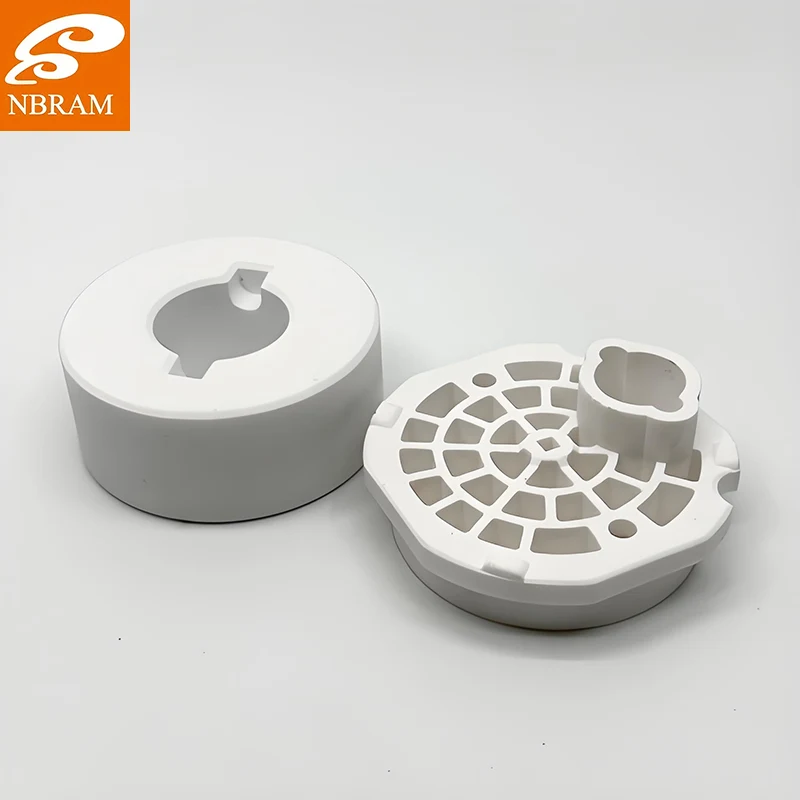

A viewing window on a metallurgical kiln is a rough posting for any insulator. The plate sits a short distance from the melt, soaking up radiant heat. Every time the door swings open it takes a face full of shop air, and molten metal splashes land on it more often than anyone plans for. Most sheet materials give up at the edges first.
Phlogopite mica plate is what we normally point customers to for that spot. NBRAM builds it for continuous service at 900°C, and the reason it survives the door-opening cycle has more to do with how the sheet is put together than with any single figure on the datasheet.
Steady 900°C is not the hard part. A part that is uniformly hot, with no gradient through its thickness, is in a reasonably stable state. The damage comes from the swing. Surface temperature drops within seconds of the door opening while the back face stays hot, and that mismatch turns into stress inside the sheet.
Phlogopite's coefficient of thermal expansion is 7.2×10⁻⁶/℃ on our sheets, close enough to most steels that the plate and the frame it is bolted to move together instead of fighting each other. Bend strength holds above 95 MPa at 800°C. In steel furnace viewing windows we have seen plates stay intact past 15,000 hours of continuous use, which is a fair service life for a part that is effectively a consumable.
The plate is built up from phlogopite layers bonded with a high-temperature silicone resin. We cure that resin at 380°C, then give the finished sheet a final heat treatment at 850°C for two hours. The heat treatment is not cosmetic. It drives off volatiles before the plate ever sees a furnace, so the sheet is not still outgassing when it is in service.
Thickness covers 0.2mm to 5mm with tolerances held to ±0.025mm, and density lands between 2.75 and 2.95 g/cm³. Sheets ship in 400×600mm and 600×900mm standard sizes, and we waterjet cut to drawing when a window frame needs a specific outline.
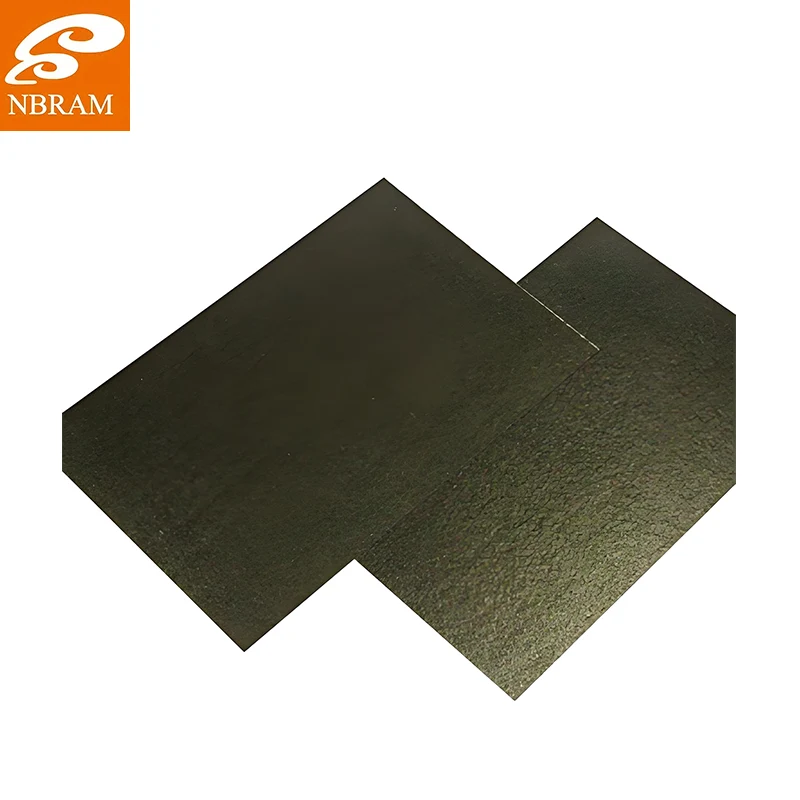
Insulation is the reason the plate is there, so dielectric strength and volume resistivity get asked about first. Dielectric strength stays above 20 kV/mm at 900°C, and volume resistivity is above 10¹² Ω·cm. Thermal conductivity sits near 0.55 W/m•K, low enough that the sheet works as a thermal barrier as well as an electrical one, which is why the same plate often ends up behind glass processing equipment and in aerospace thermal protection assemblies.
One more property earns its keep in aluminium work. Phlogopite resists fluorides, and the fluoride-rich atmosphere around a smelting cell is exactly where ordinary materials break down early.
Iron content is the quiet killer of mica insulation, so our incoming phlogopite ore is screened for magnesium content and put through magnetic separation that keeps iron impurities below 0.75%. Ultrasonic-assisted layering keeps the crystal structure intact rather than shredding it into flakes, which is what gives the finished plate its consistency from batch to batch.
Every batch then runs 20 thermal cycles between room temperature and 900°C. Between cycles we look for delamination with infrared thermography, since a split that runs inside the laminate will not show up under a visual check. Buyers who need it for design work can request the thermogravimetric analysis report for their batch.
If you are specifying an insulator for a furnace window, a glass line, or an electrolytic cell, match the grade to the real duty cycle rather than to the cheapest sheet in the catalogue. NBRAM has been making mica and thermal insulation parts in Ningbo since 2004, with ISO 9001 quality control and RoHS-compliant materials across the range. Phlogopite mica plate is available in sample sizes for trials, and we quote cut-to-shape parts against your drawing. The grade sits inside our Rigid Mica Sheet range, alongside the Mica Sheet family, and Muscovite Mica Plate if your duty cycle runs cooler.